Tanya's Diary
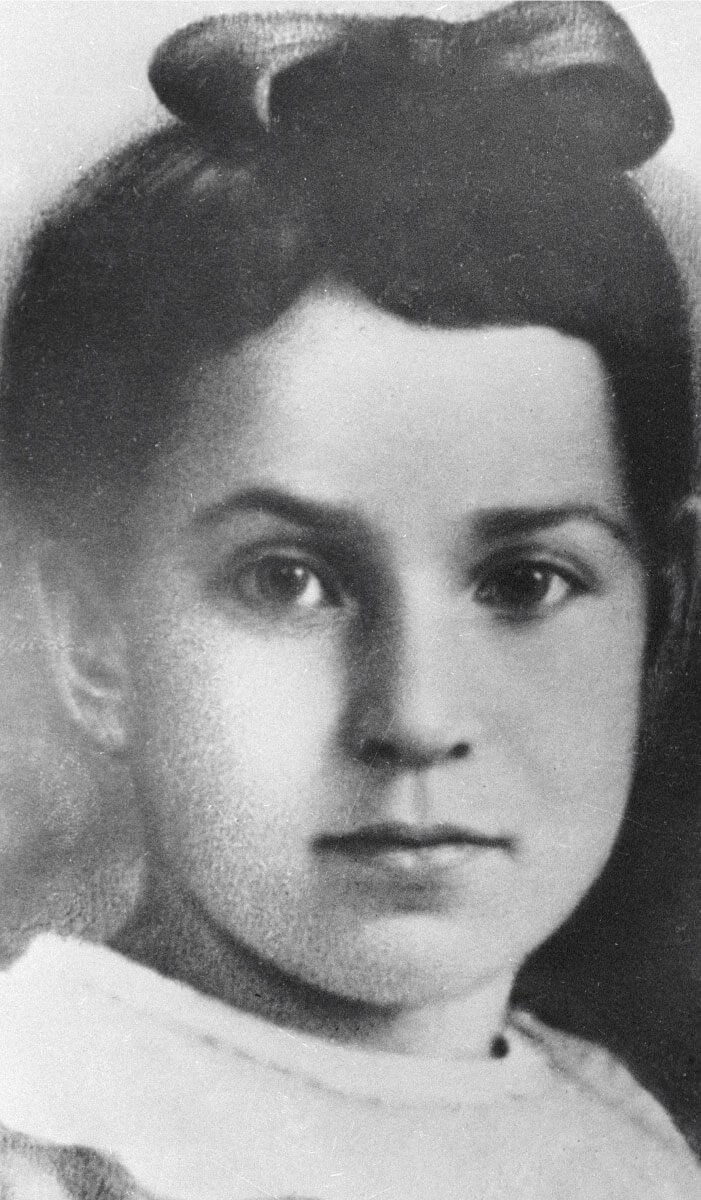
A girl named Tanya Savicheva
1941. The first winter since Leningrad was blockaded by the German army, famine hit the city. The city was filled with corpses, the water, heating, and electricity were cut off, and at the end of January the following year, food rationing was also stopped. According to the report, the death toll in January and February was approximately 200,000 people. The majority of them died of starvation.
Tanya Savicheva, an 11-year-old girl, was also in the besieged Leningrad. From the winter of 1941 to 1942, she lost a number of family members, and wrote down their deaths in a small notebook. Written line by line by a young girl, as if inscribed on a tombstone, the record of deaths stirs the reader's heart as a symbol of the misery of the siege.
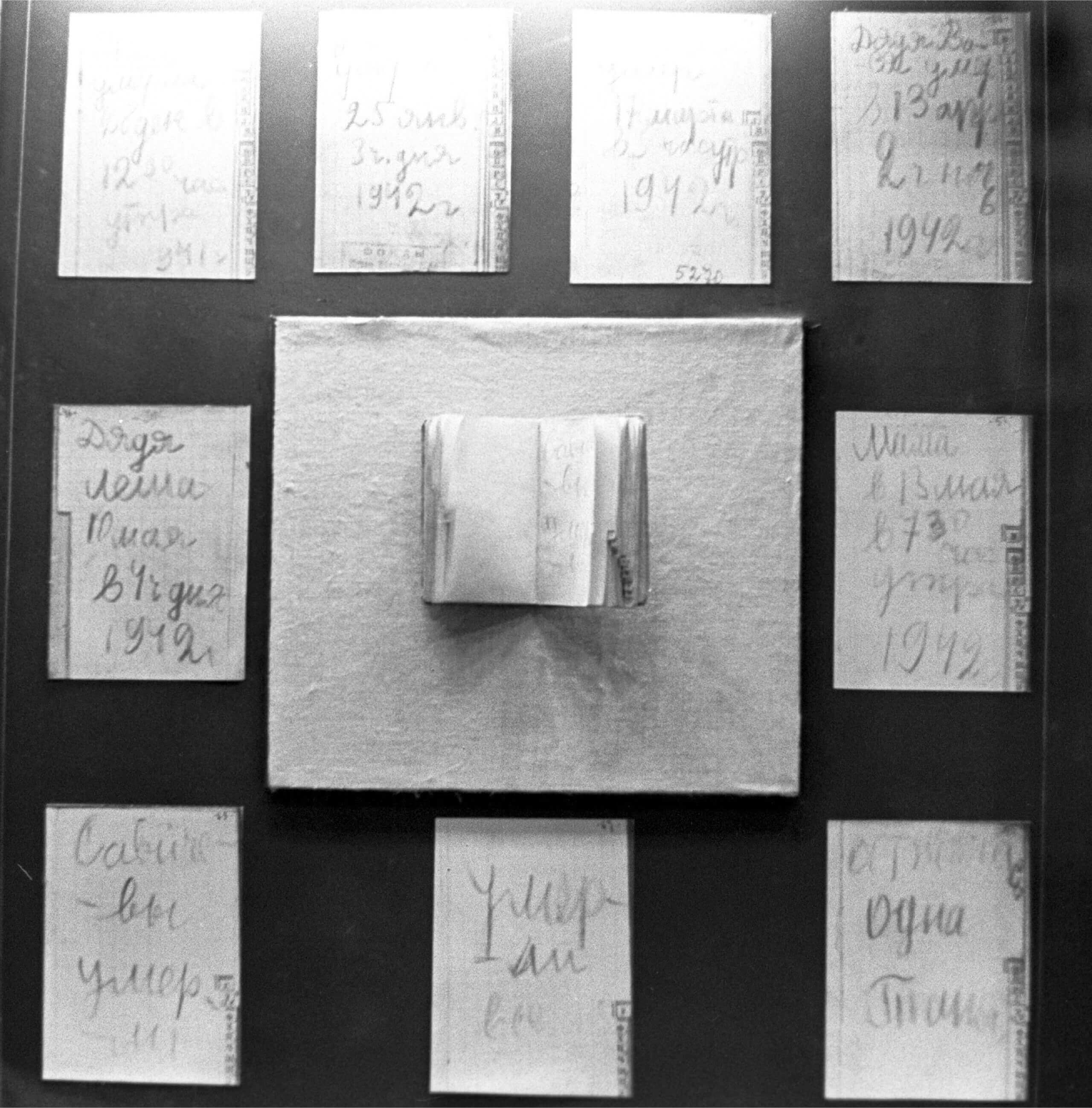
Tanya inherited a small palm-sized notebook from her sister, part of which is a phone book with alphabetical headings. In it, she wrote down her record of deaths.
Tanya's Early Life
Tanya was born in 1930 as the youngest of five siblings. Her father was a businessman who owned a bread factory and a movie theater in Leningrad, and her family was relatively wealthy. However, things changed dramatically in the 1930s. Her father was persecuted as a "Nepman *1" and the family was forced to leave Leningrad.
When Tanya was six years old, her father died of illness. Shortly afterwards, the family returned to Leningrad and began living together, supporting each other and led by her mother.
The family settled on the first floor of an apartment that had been owned by the father. The family included the mother, maternal grandmother, older sister Nina, two older brothers, and Tanya. The other older sister, Zhenya, had left home when she got married, but did not return to the family after her divorce and lived separately from them. In addition, Vasya and Lyosha, the uncles on the father's side, lived on the floor above. The family's life gradually settled down, and it seemed as if they were regaining peace.
War breaks out, famine begins
At the end of May 1941, Tanya, who had just turned 11, had finished the third grade and was due to move on to the fourth grade in September. *ii The family had planned to spend the summer in the village of Dvorishche (now a village in the Gdov district of Pskov Oblast), where her mother, Maria, lived. On June 21, her older brother Misha left first, and on the 22nd, Tanya and her mother celebrated their grandmother's birthday and then left again. The other siblings were planning to join them as soon as they could get time off from work.
However, on June 22, the day Tanya and her mother were scheduled to leave, the German army suddenly began invading the Soviet Union. Hearing the news of the outbreak of war on the radio, the family suddenly canceled their plans to spend the countryside and decided to remain in Leningrad.
On September 8, Shlisselburg fell and the blockade of Leningrad began. After the city's stockpiles were destroyed by German attacks, the city quickly fell into a food shortage, with daily bread rations falling to 500 grams for manual laborers, 300 grams for office workers and children, and 250 grams for dependents. By the end of September, oil and coal ran out, in October electricity was banned, and in November all public transportation stopped operating. With nothing to eat and no way to keep warm, citizens collapsed one by one.
Death of sister Zhenya
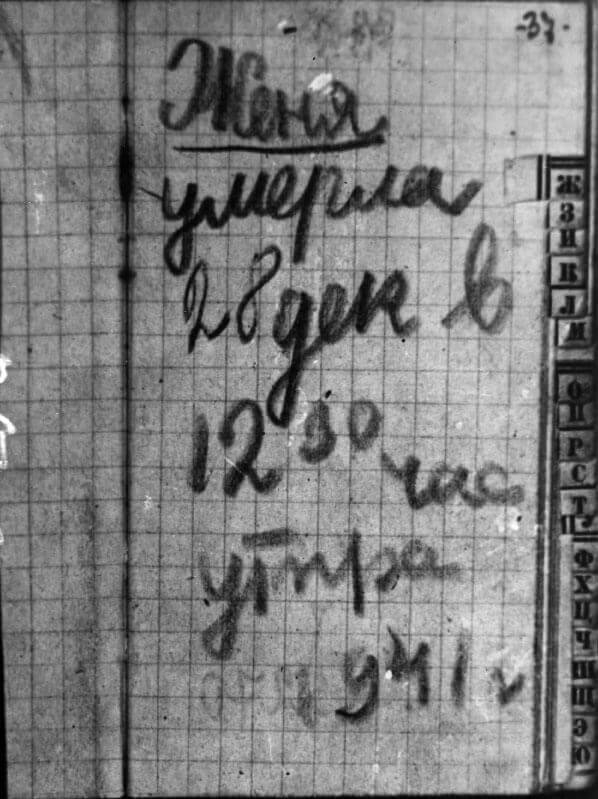
December 28th. Zhenya's older sister dies. She was 32 years old. Zhenya had been walking the 7km distance from her home to the factory where she worked in the bitter cold of -30°C, and had also frequently donated blood for transfusions to wounded soldiers. She was so weak that she no longer looked like her former self. That morning, Nina, who also worked at the factory, noticed that her sister was not there and went to Zhenya's house, which lived far away from the family, only to find her weakened sister there. Zhenya had apparently taken her last breath in Nina's arms.
When Tanya was informed of Zhenya's death, she wrote the following on the "Ж" page of her notebook:
28 years ago в 12 00 years ago 1941 years ago
"December 28, 1941, 12:00 a.m. Zhenya died."
Death of Grandmother
Shortly after the death of her sister, Zhenya, in early January, her grandmother was diagnosed with severe malnutrition. She needed to be hospitalized immediately, but the hospitals in the city were already overwhelmed with the capacity to accept sick people, and above all, her grandmother herself refused to be hospitalized. She did not want to take up hospital beds needed by injured patients.
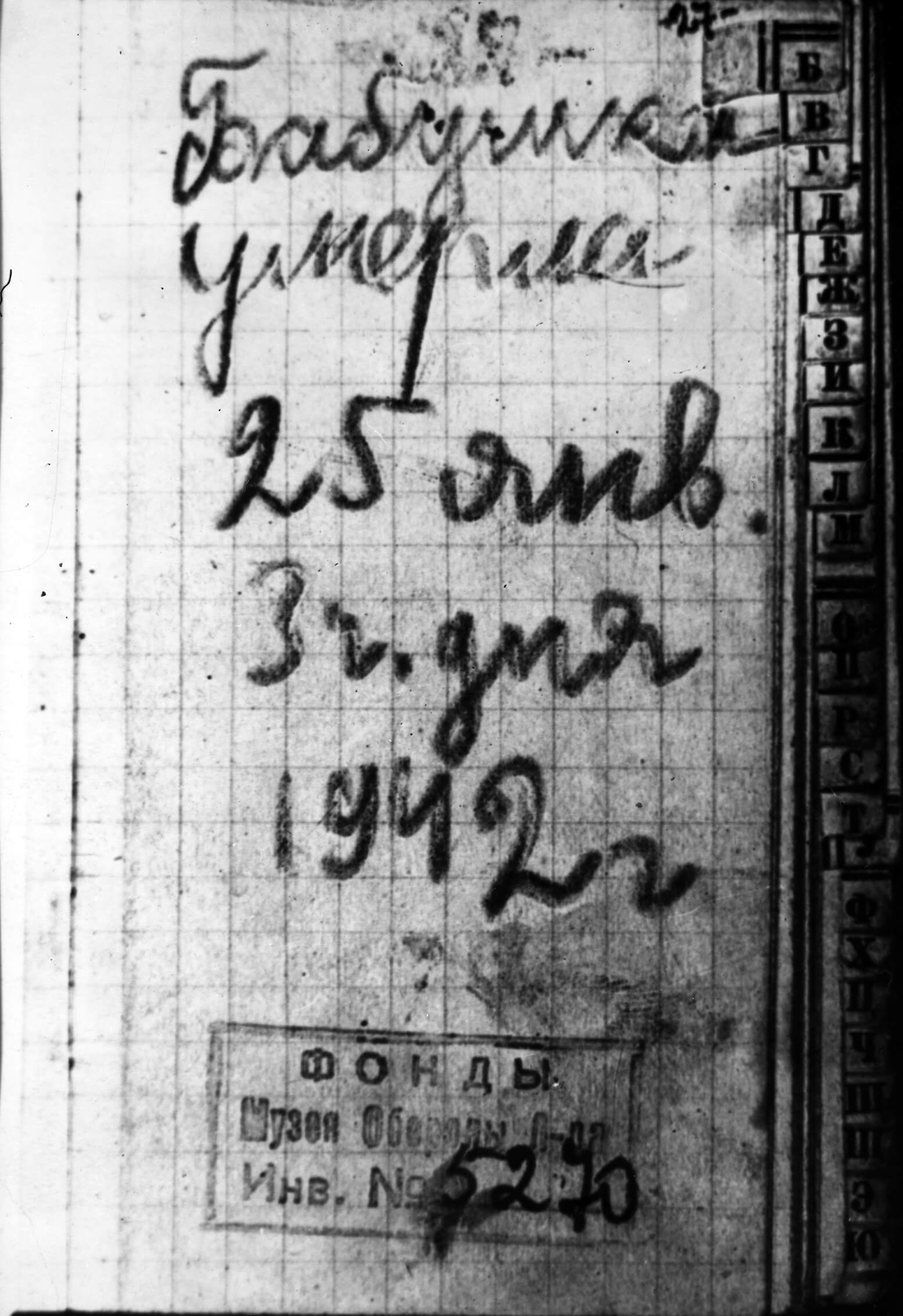
At the end of the month, Tanya added the following to the “B” page of her notebook.
25 янв 3 ч. 1942 г
"Grandma died. January 25, 1942. Three o'clock in the afternoon."
The disappearance of her sister Nina
On February 28, Leningrad was bombarded by the German army. That day, her sister Nina never returned from her workplace. Even if she tried to contact her, the telephones in the city were already out of service, so there was no way to find out what had happened to her.
Death of Brother Ryoka
Shortly after the war began, his brother, Lyokha, volunteered to be a combat soldier, but was not accepted due to his poor eyesight. Instead, he worked in a factory, working day and night. To get to his workplace on the other side of the Neva River, he walked several kilometers in the freezing cold, crossing a bridge. To conserve his energy, he sometimes slept at the factory.
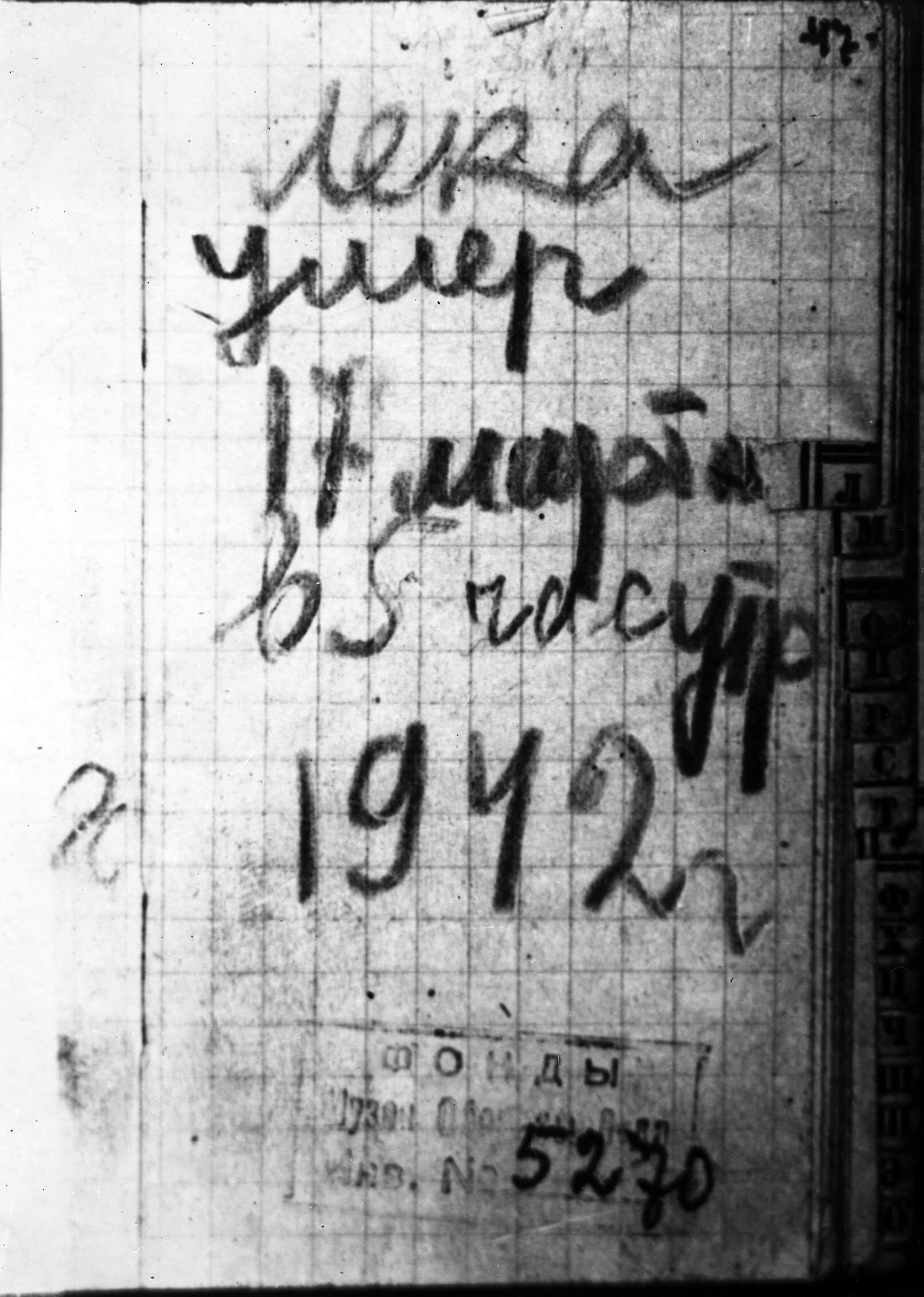
March 17. Died of exhaustion in the factory's health facility. He was 24 years old.
Tanya wrote this on the `` Ka'' page of her notebook.
17 years ago 05 years ago 1942 years ago.
"Ryoka died. March 17, 1942, 5 a.m."
Death of Uncle Vasa
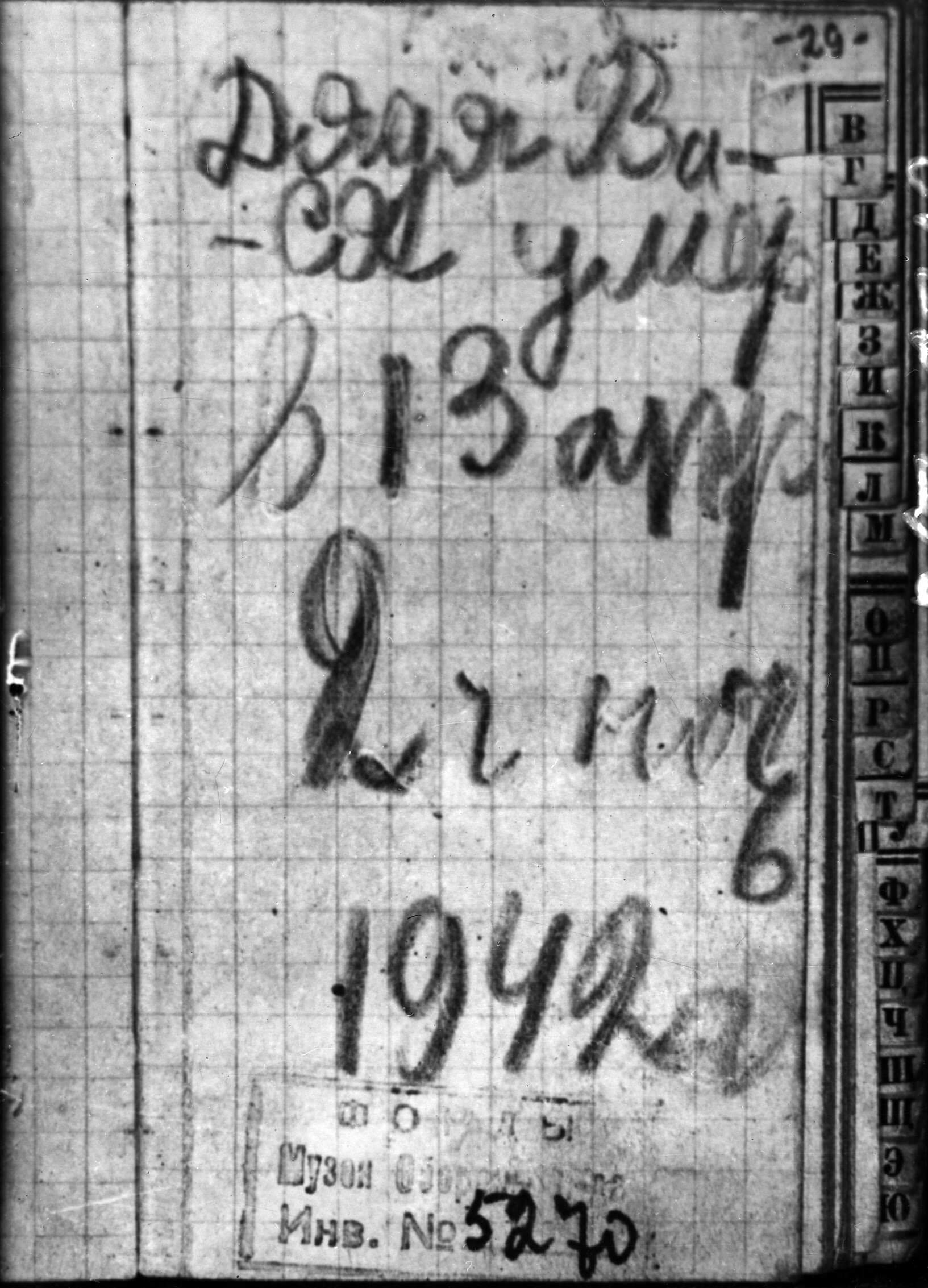
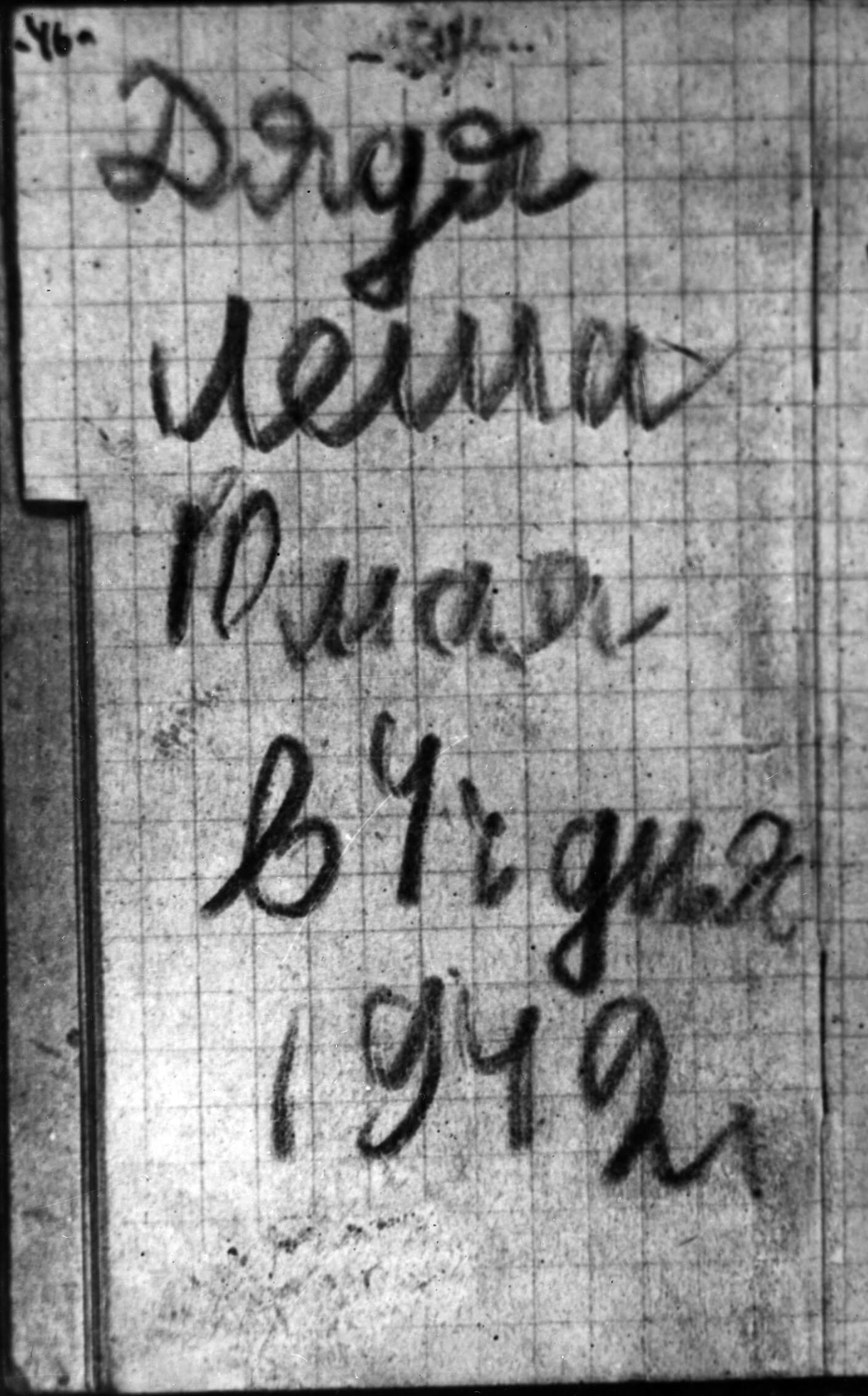
Tanya's paternal uncle, Vasya, lived on the floor above the apartment where Tanya and her family lived. Tanya was particularly close to Vasya, who was an avid reader and worked at a second-hand bookstore, and they had built a good relationship, often taking walks together along the Neva River before the war began. He died on April 13th at the age of 56. On the "Д" page of the notebook, the following is written in distorted letters:
Дядя Вася умер в 13 апр 2 ч ночь 1942 г
"Uncle Vasya died. April 13, 1942, 2 a.m."
Death of Uncle Lesha
On May 10th, about a month after Vasha's death, his uncle Lyosha passed away at the age of 71. He had died of exhaustion. On the page of "Ka," next to a note from his brother Lyosha, he writes:
10 years ago в 4 years ago 1942
"Uncle Lyosha. May 10, 1942, 4 p.m."
Death of Mother Mary
Three days later, his mother Mary passed away.
On the "M" page, Tanya added another line.
Мама в 13 мая в 7 30 час утра 1942 г
"Mom. May 13th, 1942, 7:30 a.m."
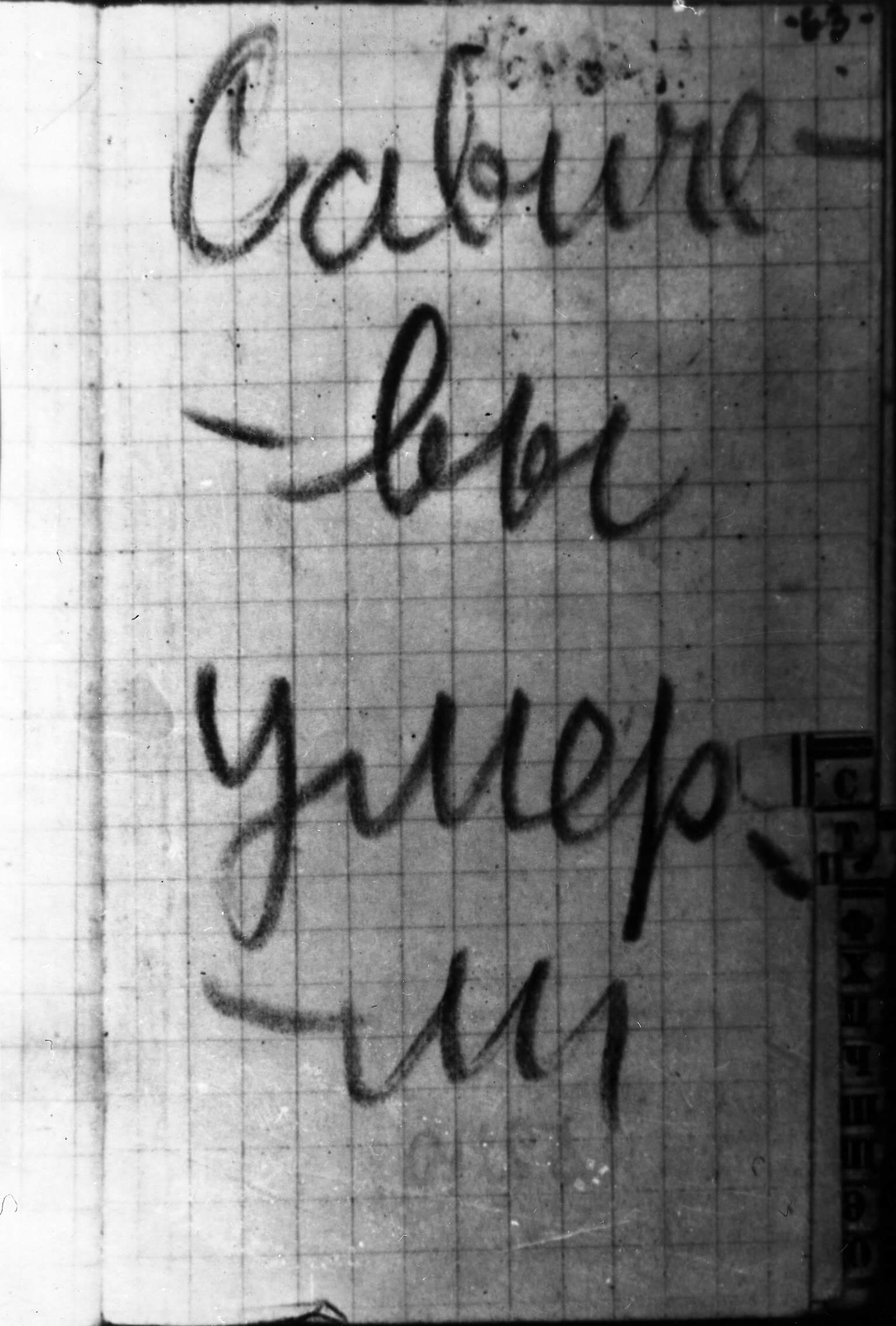
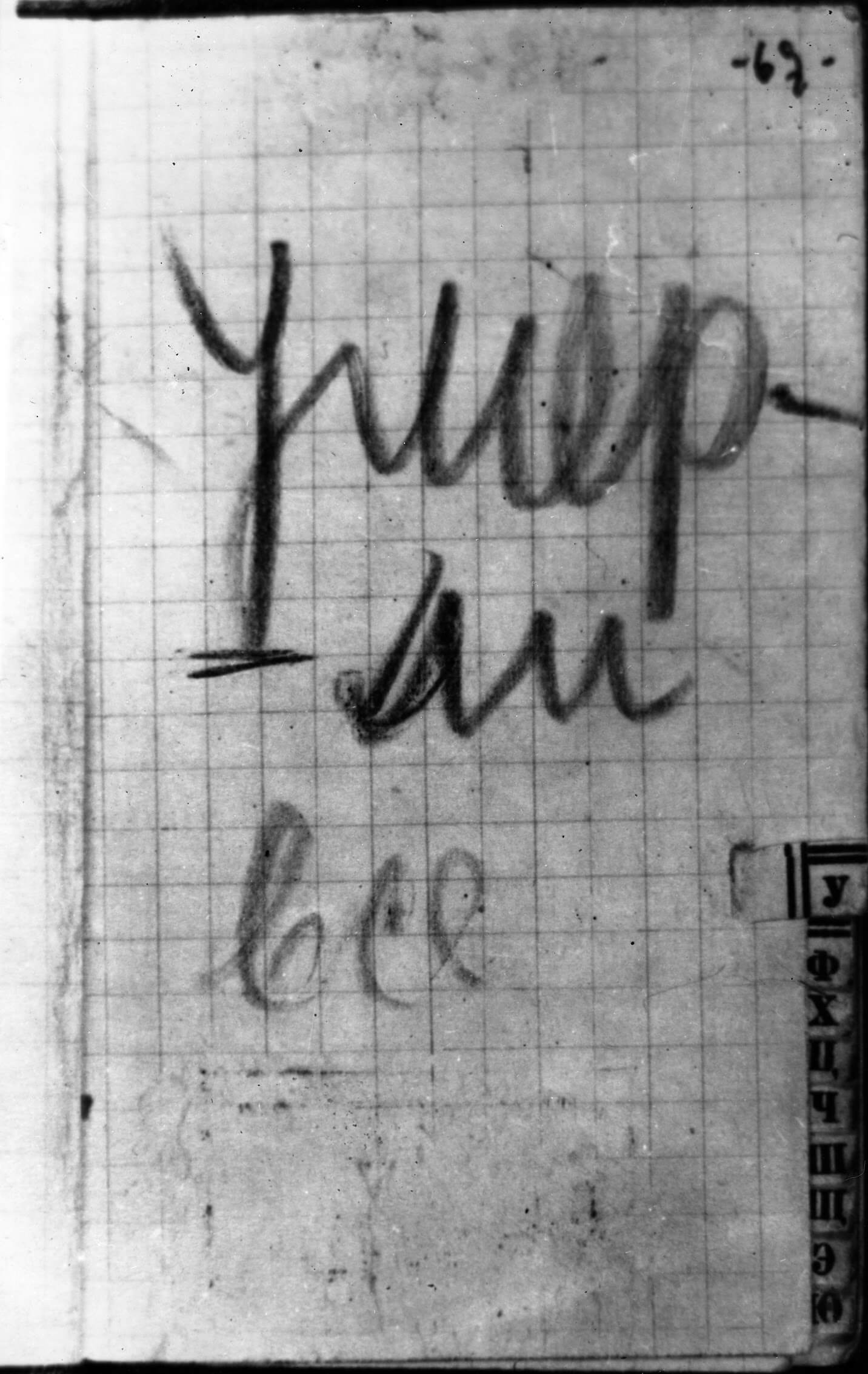
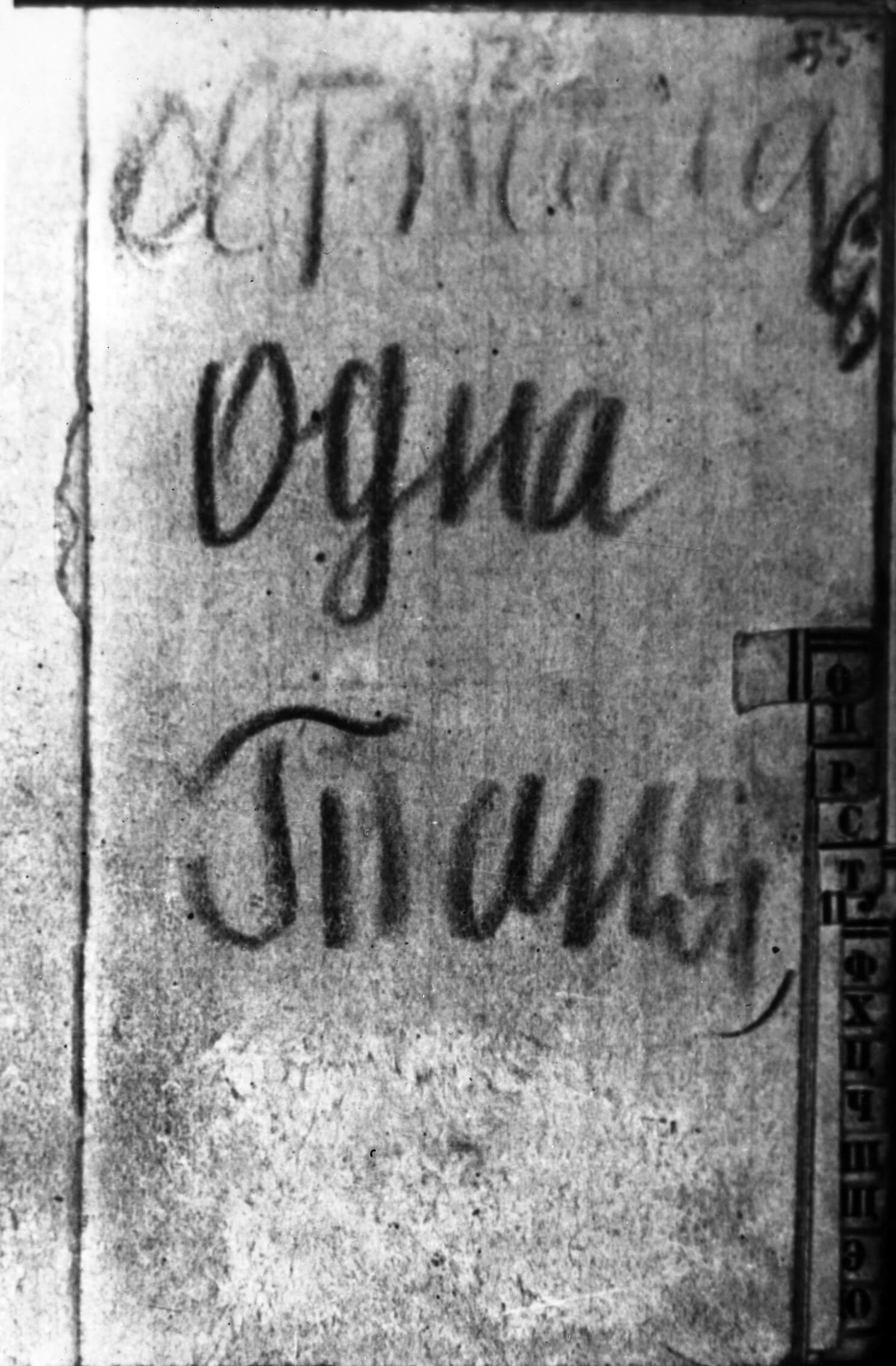
All of Tanya's family are dead. Her missing brother Misha and sister Nina are probably no longer alive. The family she lived with is no longer with her. How desperate must the young girl have been? She wrote the last four lines on the pages of "C", "U", and "O".
Coffee beans
"The Savichevs are dead"
All
"Everyone's dead."
осталась одна Таня
"Tanya is the only one left."
Tanya afterwards
She stayed with a relative living alone in the city for a time, but she did not get along well with him and was eventually sent to an orphanage. In August 1942, the orphanage where Tanya was sent began to evacuate to Shatki district, Gorky Oblast (now Nizhny Novgorod Oblast), 1,300 km from Leningrad. Tanya also set off with 125 other children for evacuation. However, in a village they stayed in on the way, it was discovered that she had tuberculosis. Tanya was isolated. She fought the disease for about a year and a half, but her condition worsened significantly. In early March 1944, she was transferred to a facility in another village, and two months later, she was transferred to the infectious diseases ward of a hospital.
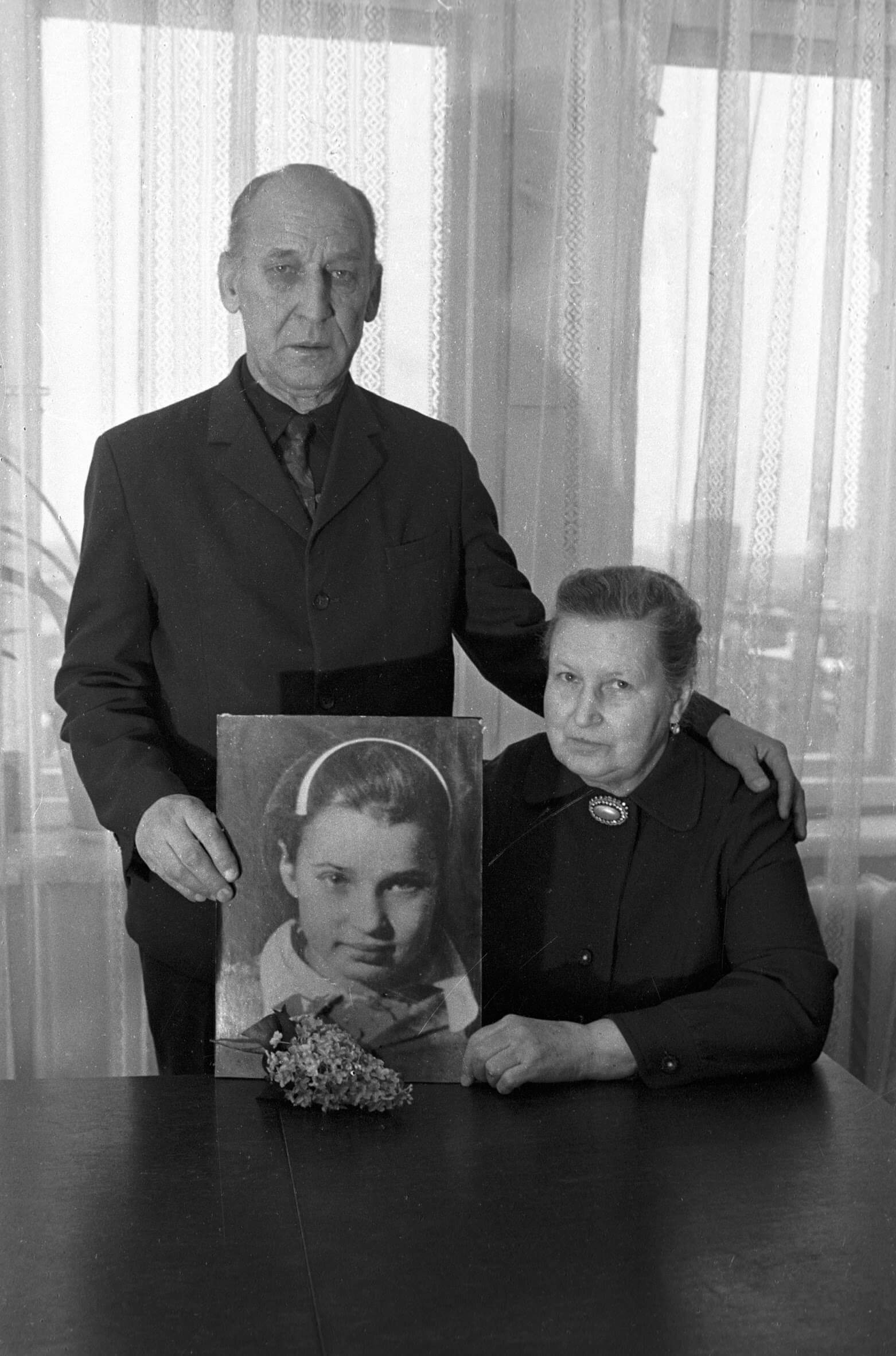
Tanya Savicheva never returned to Leningrad and died at the age of 14 on July 1, 1944. She was the only one of the 125 children who died in the evacuation. She was buried as an orphan in a nearby cemetery.
Tanya's Diary
Let's go back to the day before the war broke out in 1941. What happened to his older brother Misha, who left for the countryside before the rest of the family? When they lost contact with him, everyone assumed he was dead, but in fact that wasn't the case. Misha joined the partisans and fought against the German army, and although he was seriously injured, he barely survived the war. His older sister Nina, who had gone missing, was also not dead. On the day of the intense shelling, she had crossed Lake Ladoga with some of her coworkers and escaped from Leningrad.
After the blockade was lifted, the surviving siblings were able to return to Leningrad, but they were no longer there. However, among the belongings left behind was a notebook. This was Tanya's diary.
Families like the Savichevs were not uncommon in the harsh conditions of the 872-day siege, with citizens struggling to survive in extreme conditions.
This short but terrifying diary, in which Tanya chronicles the deaths of her family, is now kept at the St. Petersburg State Museum of History and continues to bring to visitors a powerful message of the sadness and horror of war.