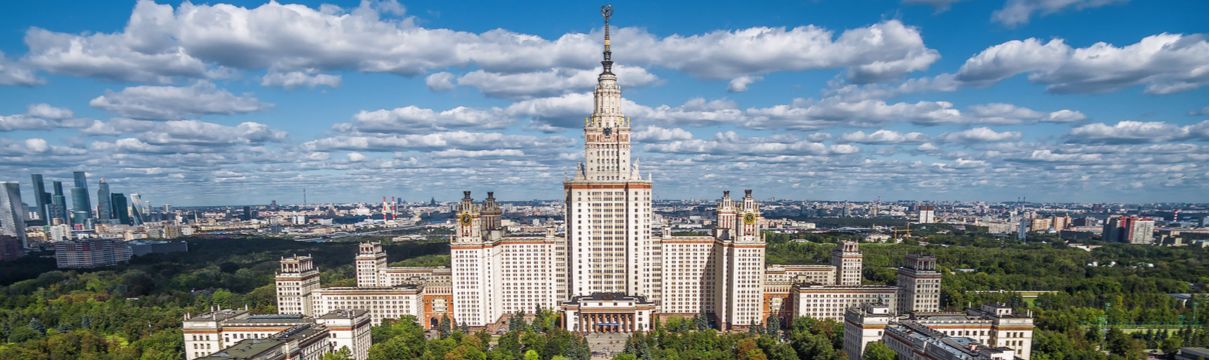
Lomonosov's achievements in natural science
1. Science and life
Lomonosov was born in 1711 in a village in Arkhangelsk Oblast into a peasant family that engaged in fishing and farming, and was not considered of upper class by the aristocratic society of the time. However, he was fortunate in that his hometown, where fishing was the main occupation, was in a unique environment where a wide range of information and culture from overseas arrived by boat, and perhaps due to this influence and his natural disposition, he became passionate about reading and aspired to become a scholar. Lomonosov's background had a great influence on his academic attitude.
 His later achievements, such as building a factory and promoting the industrialization of glass, were aimed at "applying science to real life," and seem to be a form of peasant wisdom rooted in everyday life.
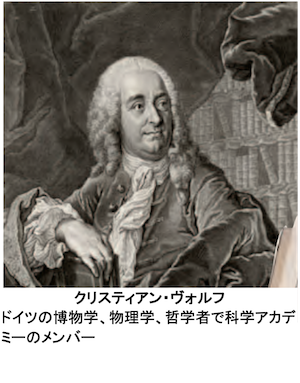
What were the beginnings of Lomonosov's studies? It was not easy for him, who came from a peasant family, to enter Russian aristocratic society. Discrimination against peasants was severe, so Lomonosov had no choice but to live by disguising his status. He disguised himself as an aristocrat in every respect, from his appearance to his enrollment in the academy attached to a monastery in 1931. After extraordinary efforts, he was recommended to the University attached to the Academy of Sciences of St. Petersburg in 1936, and in the autumn of the same year went to study in Germany. There he was exposed to academic subjects including physics and philosophy under renowned scholars such as Christian Wolff of the University of Marburg. In 1941, Lomonosov was ordered to return to Russia and was appointed Assistant Lecturer at the Academy of Sciences of St. Petersburg.
Thus began his life as an academic, and it was marked by many achievements. Many of these may not be well known to the general public, but in the context of the history of science, many of them were ahead of the more famous. His vast knowledge and interests extended not only to physics and chemistry, but also to astronomy, geophysics, geology, mineralogy and ore deposit science, making him a truly encyclopedic "scientist."
2. Lomonosov's Philosophy of Science
Behind Lomonosov's achievements in various scientific fields was his idea of nature. At the time, the basic principle of natural science was based on the assertion by Christian Wolf, Lomonosov's teacher, and philosopher Leibniz that matter is composed of elements that do not have any extension. Lomonosov attended Wolf's lectures, but disagreed with Wolf's assertion and came up with a system to explain the facts of natural science by the arrangement and movement of particles of matter that have extension, that is, molecules and atoms. He asserted that natural science studies the real world that has extension, and that the basis of all natural phenomena is the movement of particles of matter that have extension. He explained that matter is made up of molecules, and that molecules are made up of even smaller particles, called atoms. He also stated that the characteristics of various substances are due to differences in molecules, and he shifted his focus from the perspective of the movement of macroscopic objects to the movement of more microscopic particles. Based on this idea, Lomonosov went on to explain various phenomena such as chemical reactions, sound, light, heat, gravity, magnetism, and electricity.
3. Physical Sciences
In the fields of physics and chemistry, he criticized the calorie theory in his Physical Considerations on the Cause of Heat and Cold (1744). The calorie theory was a popular 18th-century idea about heat, which stated that the temperature of a substance was caused by a special particle called the calorie. According to this theory, heat was a special substance that had no mass. Lomonosov developed Bernoulli's molecular mechanics from the early 18th century, and through careful analysis of experimental data, he hypothesized that heat was caused by the rotational motion of particles. In addition to the rotational motion, he recognized that particles could also undergo chaotic rectilinear motion. He used this type of motion to prove the elasticity of gases. Lomonosov's theory was used to construct the kinetic theory of gases in the 19th century.
Based on his theory of molecular dynamics, Lomonosov also proposed the principle of conservation of matter and motion. "...All changes in nature occur when particles are lost from one body and added to another..." This is a way of thinking similar to the well-known "law of conservation of mass." Lomonosov had this view of matter and its changes earlier than Lavoisier. Incidentally, Lavoisier's discovery is said to have been in 1774, so this was proven about 30 years after Lomonosov's paper. In any case, there is no doubt that Lomonosov's scientific knowledge was excellent and he was an excellent physical chemist. Like his criticism of calorie, he built theoretical chemistry based on physical experiments. Therefore, Lomonosov is said to be one of the founders of physical chemistry.
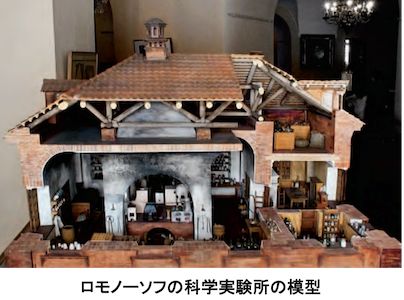
Thanks to archival research and talented architects, Lomonosov's chemical laboratory was recreated using a model in 1949. It is now located in the Lomonosov Museum, where you can see the laboratory equipment, instruments and tools.
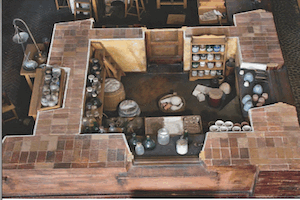
4. Astronomy
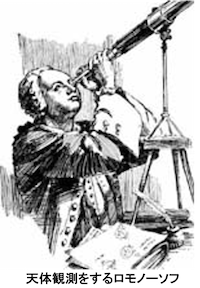
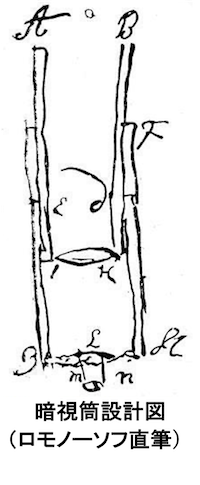
In the same field of optics, he also created a "night vision tube," which allows the observation of objects even at dusk.
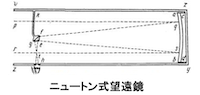 Here again science and life come together. Being able to see at night would help fishermen to see rocks and other boats more easily, helping to prevent accidents. But the Academy members concluded that this invention was useless in a dark room.
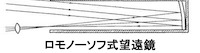 The debate over whether it was possible to increase the brightness continued even after Lomonosov's death. 200 years after his death, it was finally demonstrated that the night telescope was effective in viewing distant objects.
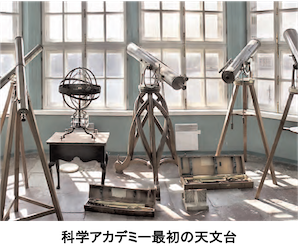
Lomonosov not only achieved great feats in observational science, but also in the creation of observational instruments. In this regard, he created a pendulum capable of measuring even the slightest changes in the direction and amplitude of vibration, and conducted geophysical research on the Earth's gravitational force. He also independently developed a viscometer, a refractometer for measuring the refractive index, a hardness tester, and other instruments, and conducted measurement experiments with them. The blueprints for these instruments are kept in the Lomonosov Museum. 33
Lomonosov, who hails from the north, has been interested in the aurora since childhood. It is now known that the aurora is caused by the light emitted by ionized gases in the upper layer of the Earth's atmosphere (the ionosphere). To understand this phenomenon, Lomonosov conducted the first experiments to recreate a light similar to the aurora. He first recreated the upper layer of the atmosphere using shielded glass with electrodes. When he switched on the electric field, the gas molecules in the layer scattered, ionizing the molecules and emitting light. He painted this electromagnetic light, and his painting was confirmed by observations from the satellite "Tatiana" launched in 2005.
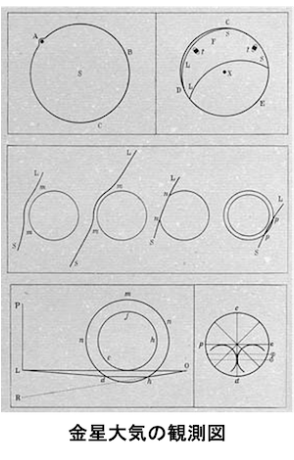
In May 1761, scientists waited for a rare astronomical event when Venus passed exactly between the Earth and the Sun, making the spot appear to move. Studying this phenomenon was important for measuring solar parallax, the angle at which the Earth's equatorial radius is seen from the average distance of the Sun.
At this time, the transit of Venus across the Sun was observed all over the world, and a Russian observation team was sent to Siberia, but Lomonosov observed it from his home.
He was convinced that Venus had an atmosphere. At the time, Lomonosov was the only person to reach this conclusion, and published a paper in Russian and German in July 1761, but it did not attract attention. It was the German astronomer Schröter and the British astronomer Herschel who were credited with discovering the atmosphere of Venus, who published their theory 30 years later.
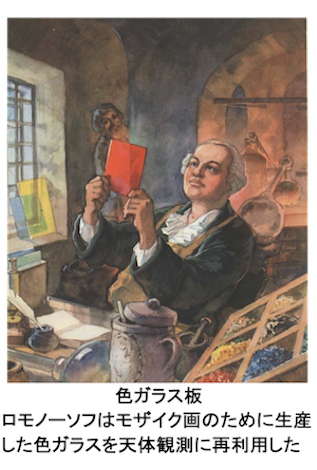
(Poem by Lomonosov)
The telescope lens shows us
How much space has the Creator created in the sky?
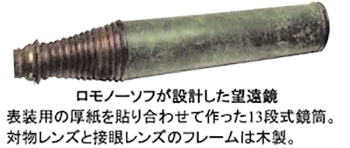
How brightly the sun shines
How many immovable stars shine in the bright night sky
Around our sun, among the other planets
The earth flows along with the accompanying moon
Even though I know that the moon is extremely large,
Just a point of light
How great is the created nature!
5. Geology and mineral deposits
In geology, he also analyzed many rocks and soils, proposing the theory of the biological origin of coal, oil, amber, etc. Needless to say, it is a leading theory that has a certain degree of support in modern times, although much debate is still ongoing. He is also known for his outstanding contributions to geology, such as providing strong evidence that a continent exists at the Antarctic.
Lomonosov's starting point was his study abroad in Germany while studying at the University of the St. Petersburg Academy of Sciences, where he received training in chemistry and metallurgy. In Germany, he came into contact with field geology, coalfields, metal deposits, and rock salt deposits. In a letter to a historian, he said, "My main work is in the field of mining chemistry," which gives an idea of the extent of his interest. In addition to his geological achievements and pioneering work, we will now list his "achievements" in the field of mineral deposit science.
Geology
- Introducing Chemistry, Physics, and Mathematics into Geological Research
- Divided geological processes into internal and external processes, and particularly outlined the characteristics of the latter.
- He explains that in past geological times, layered sedimentary rocks were formed by deposition in ocean basins.
- Proposed the concept of alternating transgressions and regressions
- Causes of marine transgression and regression What can be expected from long-term continental movements, earthquakes, and tectonic movements?
- Linking volcanism and mountain building
- Describes the secondary alteration of rocks under high temperature and pressure
- Explains that tectonic movements are caused by the Earth's internal energy
- Mineral deposits (VI Smirnov, "New Edition of Mineral Deposit Geology")
- The deposits were divided into four categories (veins, horizontal layers, sac-like deposits, and surface deposits).
- Rock salt is thought to have originated from seawater
- Coal was understood to be the carbonization product of peat.
- Petroleum was made into a product of geothermal dry distillation of plants
- Metal deposits are divided into vein deposits, surface sedimentary deposits, and surface alluvial deposits.
- Relating placer deposits to vein deposits
- Describes the phenomenon of surface enrichment of ores
- Accurate understanding of fault movement phenomena after mineral deposit formation
- It describes in detail the characteristics of gold, silver, lead, tin, copper, iron, antimony, arsenic, bismuth, and mercury.
His achievements in geology and mineral deposits are expressed in books such as "An Observation Concerning the Formation of Metals by the Shaking of the Earth" (1757), "On the Layers of the Earth" (1763), "First Principles of Metallurgy and Mining" (1763), "Plan of a Collection of Minerals" (1763), and "Description of Russian Mineralogy" (1763). Behind these achievements is his foundation in geology as a science based on the lawful evolution of nature. He said, "Many people think that everything they see was created by a Creator from the beginning.... Such an idea is extremely harmful to the growth of all sciences...."
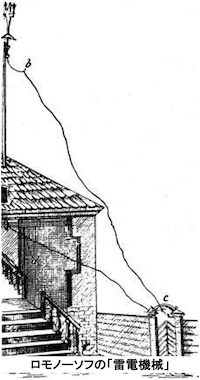
Lomonosov achieved great feats in mining science by understanding the physical conditions for the free movement of air in mine tunnels, helping to solve the ventilation problem and even applying his knowledge to blast furnaces operating without forced draft.
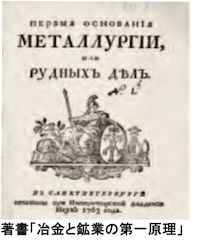
The study of Russian ores was one of the most important tasks of Lomonosov's scientific activity: in 1742 he began writing "First Principles of Mining" and in 1763 published "First Principles of Metallurgy and Mining".
Author of "First Principles of Metallurgy and Mining"
Lomonosov was interested in prospecting for and extracting minerals, which he continued to do throughout his life. Samples of ores and salts were sent to the Academy, which Lomonosov had to analyze in his chemical laboratory. He proposed a project for collecting minerals in Russia to the Senate, and prepared a magnificent work called Russian Mineralogy, but he never managed to complete it. His life was too short. At a public meeting of the Academy of Sciences on September 6, 1751, Lomonosov said the following about minerals and metals:
"In my opinion, the first of the arts is metallurgy, which teaches us how to find and refine metals and other minerals. Not only is this superiority irrefutable from the great antiquities of scripture and from the history of mankind itself, but its immense usefulness is everywhere seen, for metals give strength and beauty to the most important necessities of society; with them the temples of the gods are adorned and their thrones glitter; they protect us from the attacks of our enemies; they make our ships stable and anchored by their strength, and they make them safe to sail through the stormy seas; they cultivate and fertilize the earth; they help us catch animals of the land and sea for food; they help the merchant to obtain useful coin instead of the trivial and burdensome exchange of goods. In short, no art or trade can avoid the use of metals."
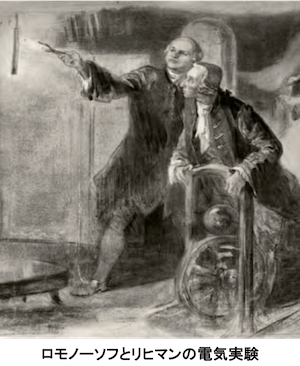
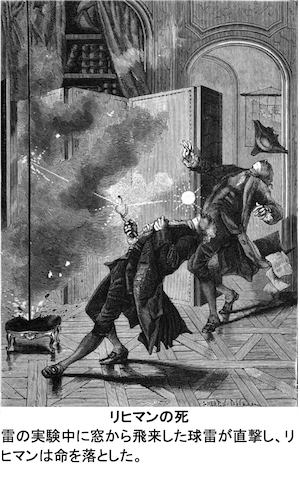
A public session of the Academy of Sciences was scheduled for September 6, 1753, at which Lomonosov and Lichmann would give their reports, but on June 26, tragedy struck: Lichmann was struck by lightning and killed.
6. Geography
His interests ranged from the microscopic world of molecules to the macroscopic world of celestial bodies, eventually covering the entirety of Russia. In 1758, Lomonosov was appointed inspector of the Geographical Bureau, the Historical Society, and the Junior School of the University Academy of Sciences. As part of the Geographical Bureau, he began compiling the "Russian Atlas." He sent questionnaires to various parts of Russia, obtained information on physical and economic geography, processed it, and attempted to compile it. Although he never completed it, it led to achievements such as proposing social welfare policies. In this way, he was also very active in the field of geography. In his paper "On the Improvement of the Accuracy of Waterways" (1759), he invented a method and instrument for measuring latitude and longitude, and proposed the establishment of an International Academy of Navigators to solve technical problems in navigation. This was the first time in the world that such an academy was proposed. Lomonosov also began to research sea ice, which is a navigator's nemesis, and was the first in the world to classify sea ice. He further emphasized the importance of opening Arctic sea routes to Russia, writing "Description of the various types of travel through the Arctic Ocean, and evidence of a possible route from the Siberian Sea to the Indian Ocean" (1763).
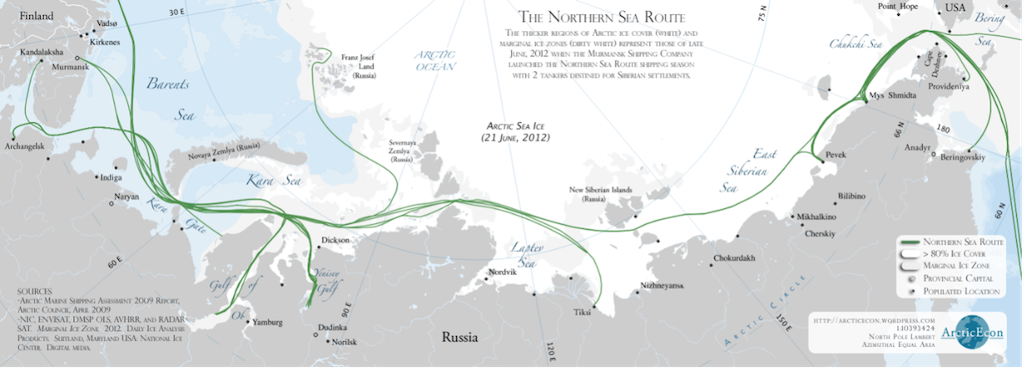
Arctic Ocean Route
He also began thinking early on about the development of Siberia, a challenge facing Russia to this day. He combined economics with geography. Nowadays, terms like "economic geography" are not so uncommon, but in Lomonosov's time, economics itself had not yet been established. Even Adam Smith's "Wealth of Nations" was published in 1776. Lomonosov used questionnaires to investigate Russia's physical geography and the state of rivers from a hydraulic point of view. His investigations also extended to the ecology of birds and animals, showing that he was trying to combine economics and nature through science.
7. The Wise Man
"Lomonosov is a universe in itself," said the great Russian poet Pushkin in his assessment of him. Lomonosov, who was not only an expert in natural science but also wrote poetry himself, was truly a great cosmic sage. In natural science, Lomonosov's starting point was the field of geography, which he began during his time in Germany. In other words, it is the study of the "earth." His academic view was also always rooted in the soil of life. Starting out from the poor land of the north, the young man eventually built up an immense body of knowledge that extended across the whole of Russia and even the universe. What on earth was Lomonosov? He was the "great wisdom" of the world that came from the "earth" of Russia.
References
Fumio Kishimoto, "Encyclopedist and Scientist Lomonosov," Geology News, July 1978 (No. 287), pp. 48-55
Hiroaki Sasaki, "The Academy of Sciences and MB Lomonosov: Russia's Scientific and Cultural Independence," Yokohama National University Bulletin, 1986, No. 26, pp. 47-69
300-летию со дня рождения: по материал ам Музея М. В. Ломоносова. П.: Изд-во Петроний,