



Associate Professor
Naoki Higuchi
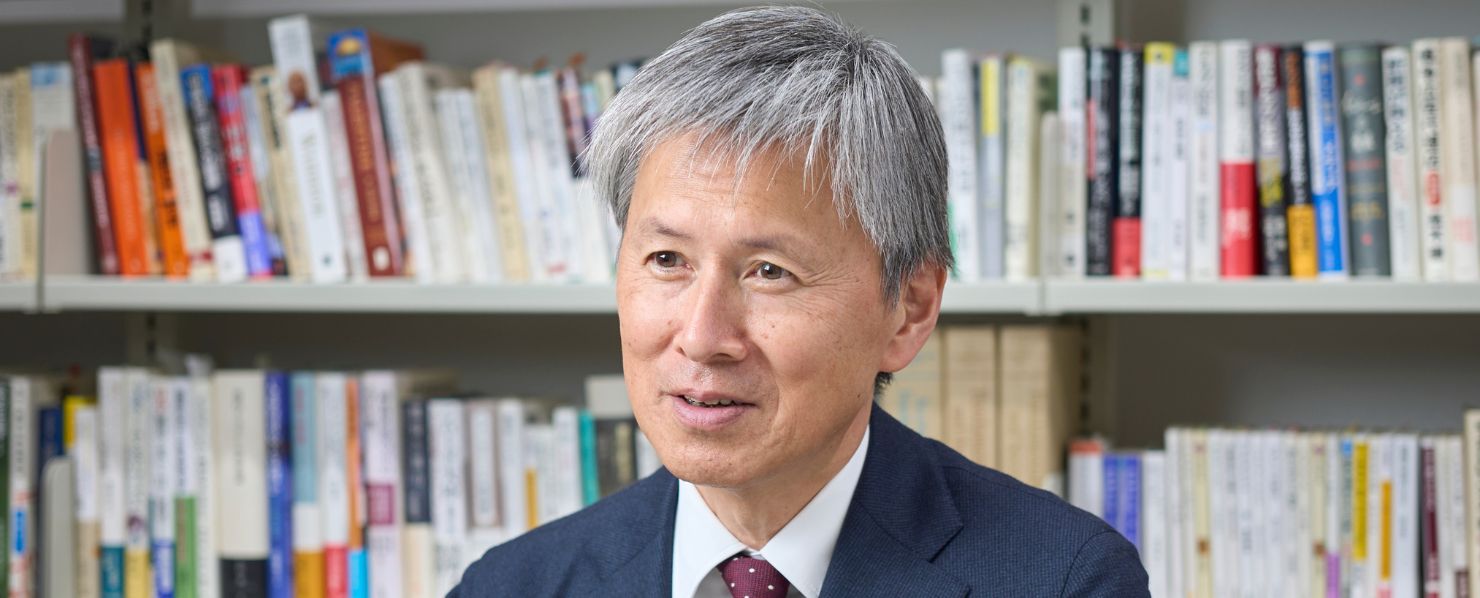
Profile
| Specialized Field | Middle Eastern Studies, Political Sociology (De-democratization Studies), Journalism Studies |
|---|---|
| Research theme | The impact of war, memory, and identity on the decline of democracy (de-democratization) |
| research content | My research spans Middle Eastern studies, political sociology, and journalism, examining how war, social trauma, collective memory, and identities such as ethnic, national, and religious affiliations contribute to the decline of democracy. Here, political sociology refers to a field that examines politics not only through political institutions and power dynamics, but also through the workings of the social consciousness, discourse, and identity that underpin them. In particular, I am interested in how the discourse of "anti-Semitism" was used in wartime Israel and how critics were positioned as "internal enemies." The starting point for this research was the question surrounding the "Gaza War" (large-scale fighting between Israel and the Islamic organization Hamas) since October 2023. Why did Israel prolong its attacks despite repeated calls for a ceasefire from the international community? In order to consider this question, it is essential to understand the historical experience of the Jewish people, particularly the memory of persecution represented by the Holocaust (the mass murder of Jews), and the victim mentality associated with it. The Israeli government has often countered international criticism of its military actions by linking it to "anti-Semitism" and claiming that the criticism is unjust. Furthermore, this rhetoric is directed not only abroad but also domestically, and in some cases, even those who disagree with the government's war policies and occupation policies are positioned as "internal enemies." I view this phenomenon not merely as an example of Middle Eastern politics, but as an important case study for considering the deterioration of democracy. Traditional studies of de-democratization have primarily focused on institutional changes such as electoral system reforms, weakening of the judiciary, and media control. However, I want to provide a more comprehensive picture of the process by connecting elements such as war, social trauma, collective memory, identity politics, and transformations in the space for discourse. In particular, I am interested in how certain discourses exclude critics, stifle dissent, and create "enemies" within society. I graduated from Soka University Faculty of Law in 1989 and joined the Mainichi Shimbun as a reporter. After working for the police and government in rural areas, I have mainly been engaged in reporting and writing in the international field. From 2003 to 2006, I was stationed in Jerusalem and conducted on-site coverage during the Second Intifada. From 2011 to 2013, while stationed in Vienna, he reported on the events of the Arab Spring, a movement for democratization that swept across the Middle East, especially the popular revolution in Egypt. While I dedicated myself to covering daily events in the field, after many years as a journalist, I came to believe that I wanted to further deepen the experience and knowledge I gained and pass it on to the next generation through research and education. Therefore, I took early retirement after 30 years of service and enrolled in graduate school in Kyoto to begin my research career. My current research is an attempt to examine the fragility of democracy in the modern world by combining the field sense I cultivated as a journalist with the academic inquiry I gained in graduate school. |
| Subjects in charge | General Comprehensive Exercises A/B, Media Exercises I/II/III/IV (Journalism), Special Lectures V/VI (Liberal Democracy) |
| Seminar Theme | Studies on De-democratization: The Shadows of Memory, Identity, and War in the Space of Public Discourse |
| Seminar Introduction | This seminar will examine the process of de-democratization in the Middle East, primarily using the "Gaza War" since October 2023 and the military coup following the "Egyptian Popular Revolution" of 2011 as case studies, through analysis of media discourse and interviews with those involved. The decline of democracy is not solely driven by changes in electoral systems and governing structures. It is crucial to consider how war, social trauma, collective memory, and identities such as ethnicity, nationality, and sectarianism generate discourse within society and how dissent and criticism are suppressed. This seminar will interpret the complex realities of the contemporary Middle East by focusing on this relationship between politics and language. In running this seminar, I emphasize balancing journalistic on-the-ground experience with academic rigor. Firstly, leveraging my strengths as a practitioner-faculty member, I prioritize field research utilizing my 30 years of reporting experience and the personal network I've cultivated in the Middle East. In addition to reviewing literature and news materials, I aim to cultivate the ability to understand various events within concrete contexts by considering online on-site interviews and, where possible, on-site investigations. Secondly, in the third year, I aim to practically hone students' thesis writing and presentation skills, with the goal of presenting at relevant research meetings and academic conferences. Through the entire process of formulating questions, gathering materials, analyzing them, and communicating them to others, I aim to cultivate the fundamental research skills and communication abilities necessary for research. |
| Message | Wars and political conflicts occurring around the world may seem like events in distant regions, but in reality, they are deeply connected to the very structure of our own societies. Issues such as freedom of speech, exclusion of minorities, historical recognition, and media responsibility are unavoidable challenges when considering modern democracy, not just in the Middle East. I believe that carefully deciphering the history, memory, identity, and political context behind events, rather than merely following them superficially, is essential for understanding these complex times. Let's cultivate the ability to think for ourselves, discuss in our own words, and communicate accurately about the trends and future of the modern world, while valuing both on-the-ground experience and the ability to objectively analyze documents. |