

ICU students participate in the Conference of the Parties to the United Nations Framework Convention on Climate Change (COP30)
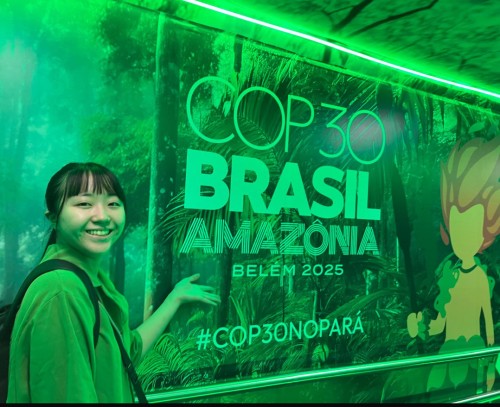
Kyoko Kawase, a second-year GCP Faculty of Law, participated in the Conference of the Parties to the United Nations Framework Convention on Climate Change (COP30) held in Brazil from November 10 (Mon) ~ November 22 (Sat), 2025.
COP30 is the 30th Conference of the Parties to the United Nations Framework Convention on Climate Change (UNFCCC), an international conference that will determine the direction of global decarbonization and climate change measures.
The conference, held at the milestone of 10 years since the adoption of the Paris Agreement and 20 years since the Kyoto Protocol came into force, brought together governments from around the world, including Japan, companies, and NGOs, who intensively discussed topics such as updating emission reduction targets (NDCs) for the "implementation" of global warming countermeasures, climate change adaptation measures, and support for developing countries.
While studying environmental policy at university, Kawase learned about the reality that deforestation in the Amazon was threatening the lives and dignity of indigenous peoples. Wanting to hear the voices of those directly involved, he applied for an NPO representative dispatch program.
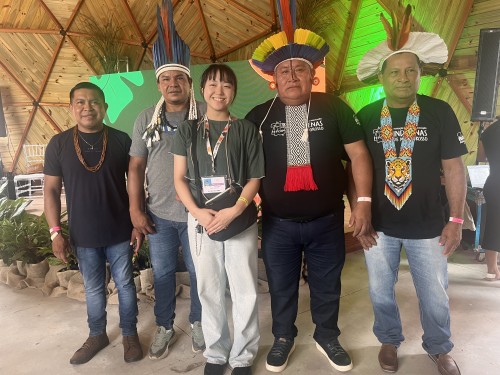
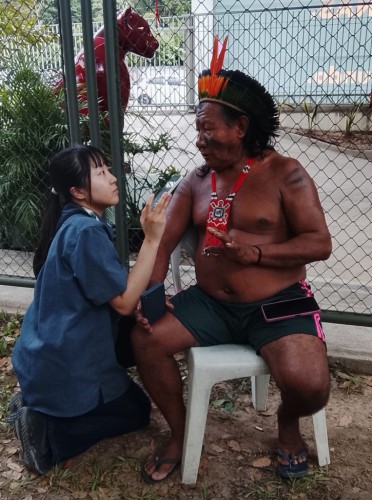
Kawase said, "I participated in the Aldeia COP, an indigenous peoples' gathering, and interviewed 15 indigenous people. I also took part in an opinion exchange meeting with young people from Asia, where I shared the feeling of powerlessness on the climate issue that many of my generation feel. However, seeing the indigenous people's view of nature, their fun-filled way of protesting, and their democratic stance of actively intervening in government affairs, I felt that in order to overcome the sense of political ineffectiveness that young people feel (i.e., no matter what I do, the situation will not change), it is important to first speak out, raise our voices with our peers, and actively intervene in policy. I remember one indigenous person saying, 'Forests are the lifeblood of all people all over the world.' Seeing people on the ground continuing to raise their voices made me realize that my own actions also have meaning. The experience of talking across borders with people of my generation made me realize that the power to change society lies within us."