



Associate Professor Yohei Furukawa of the University of Graduate School of Letters has published a book titled "Faith in the Pali Sacred Scriptures: An Examination of the Meaning and Character of Saddhā" by Institute of Oriental Philosophy
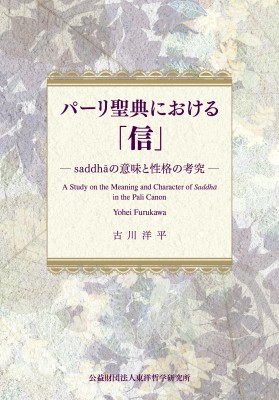
Associate Professor Yohei Furukawa of the University of Graduate School of Letters published a book titled "Faith in the Pali Sacred Texts: An Examination of the Meaning and Character of Saddhā" was published by Institute of Oriental Philosophy on March 3.
This book is a saddhā (Chinese translation of "faith") used in the Pali scriptures handed down in Theravada Buddhism, which is practiced in Sri Lanka, Thailand, Myanmar, etc. In Sanskrit, it is śraddhā. It corresponds to the Latin word credo) and presents basic information about this word. The Pali scriptures are primary sources for revealing early Buddhism, close to historical Buddhism. This book structures the saddhā used in the Pali scriptures, clarifies its meaning and character, and explores the basis of "faith" in Buddhism.
Saddhā / śraddhā is a word that is often used in the Lotus Sutra along with its synonym adhimutti / adhimukti (Chinese translation "Xinjie"). The publication of this book can be said to provide a basic perspective on considering "faith" in Mahayana Buddhism as well as early Buddhism.
At the time of publication, Associate Professor Furukawa said, "Some of the terms used in the Pali scriptures are not clear in terms of meaning and character, and the saddhā discussed in this book is one of them. If you apply the kanji "信" to saddhā as it is, you may deviate from the essence of the meaning of the original word. Vocabulary research is a very detailed work, but if you can grasp its core meaning, I think it will be very fruitful."

Associate Professor
Yohei Furukawa
- Specialized Field
Early Buddhism (Primitive Buddhism)
- Research theme
- Clarification of terminology used in early Buddhist scriptures
- Clarification of Buddhist thought and culture based on the clarification of terminology