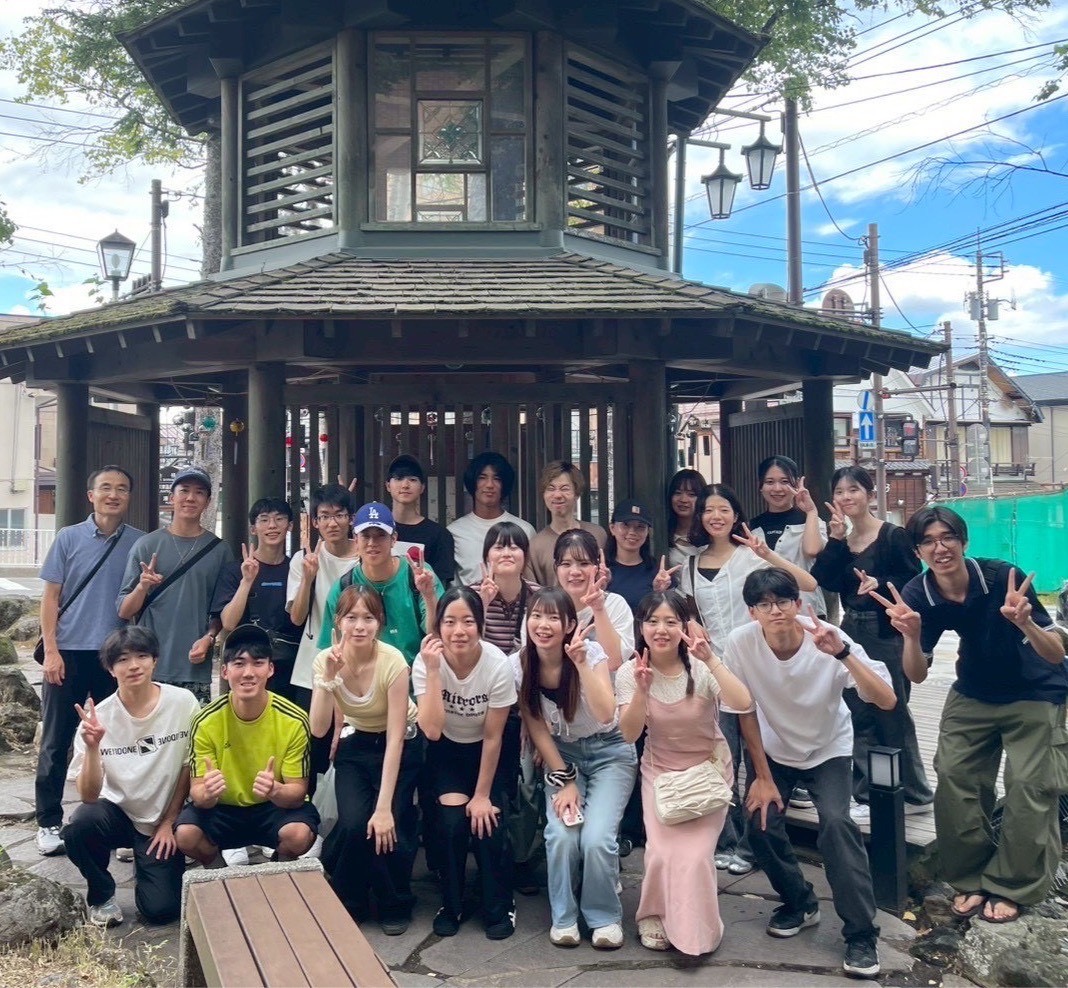


Dedicated herself to the New York screening of a film depicting the atomic bombing of Nagasaki — a new career forged after raising children
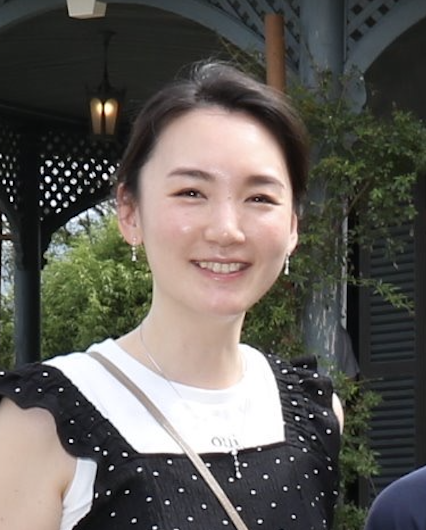
Akiko Sakaguchi
Faculty of Economics Department of Economics Graduated March 2010
SKY CASTLE FILM Co., Ltd.
In April of this year, the film "Nagasaki - In the Shadow of a Flash," which depicts Nagasaki immediately after the atomic bombing, was screened in New York City with the support of the United Nations. Akiko Sakaguchi worked tirelessly as a member of the production company to coordinate and negotiate in order to make this screening a reality. After 13 years of raising children following her pregnancy, Ms. Sakaguchi jumped into the entertainment industry at the age of 35, a field in which she had no prior experience. We spoke with Ms. Sakaguchi about the reaction in New York, the message conveyed in the film, and her own career.
What kind of movie is "Nagasaki - In the Shadow of a Flash"?
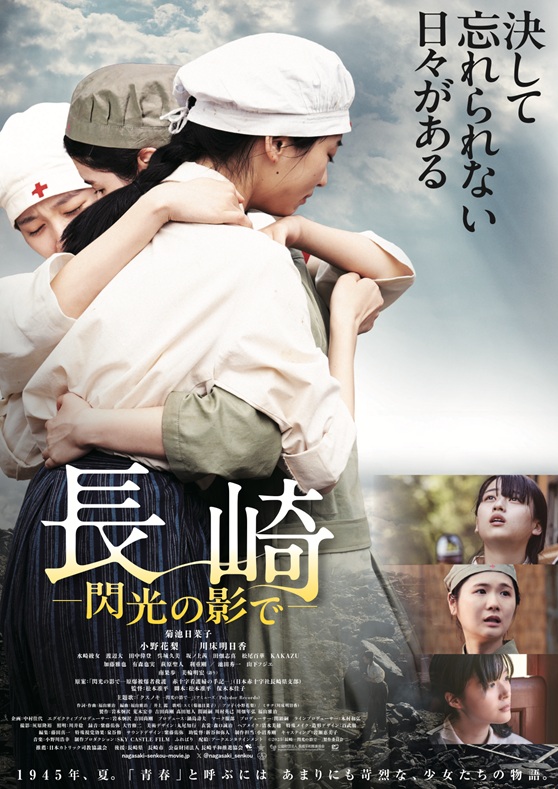
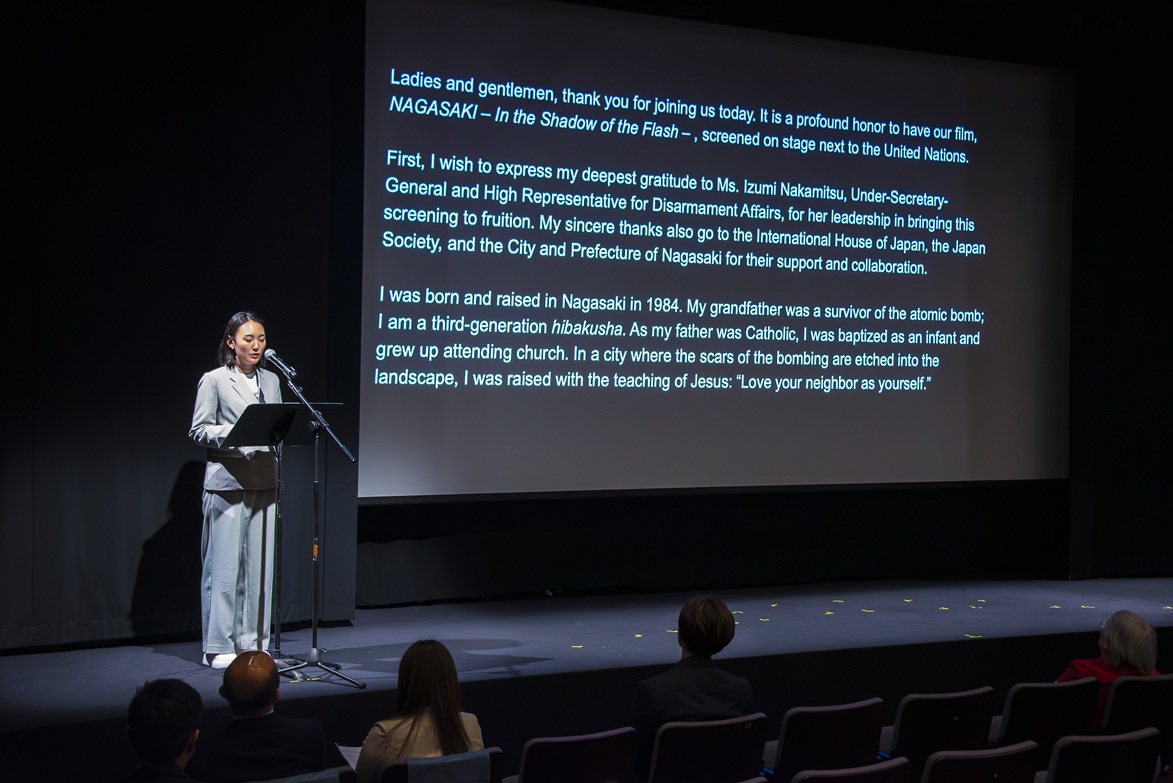
This film depicts the atomic bombing of Nagasaki and the subsequent tragedy from the perspective of three young nursing students. It was released nationwide last August, marking the 80th anniversary of the end of the war, and on April 28th of this year (local time), a satellite screening sponsored by the United Nations was held at the Japan Society, located near the UN headquarters in New York. I have been involved with this film since the end of filming as an employee of the production company, and I have served as the coordinator of the production committee, which consists of seven companies.
This film is based on the memoirs of nurses who actually provided aid to atomic bomb survivors in Nagasaki. The story of the people of Nagasaki, whose daily lives were suddenly taken away by the atomic bomb, has the power to deeply convey to us, who live today, the preciousness of life and peace. As a mother with a daughter of the same age, I couldn't help but feel deeply moved by the three nursing students who bravely faced life and death despite being survivors themselves.
How did the screening in New York come about?
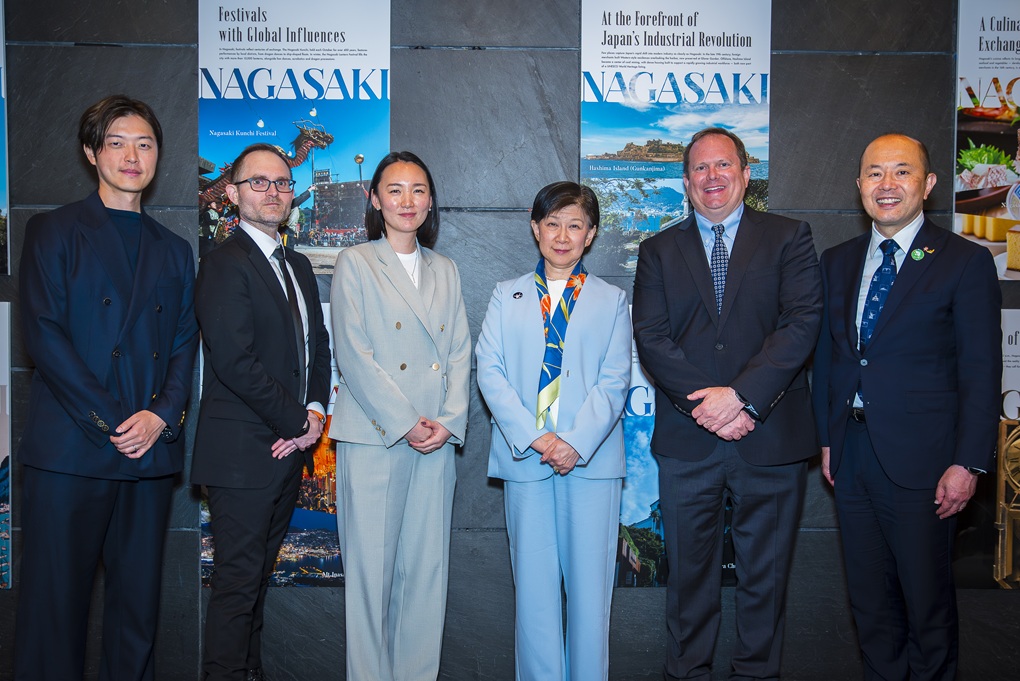
When Junpei Matsumoto, the director of this film, met with Izumi Nakamitsu, who serves as the Under-Secretary-General and High Representative for Disarmament Affairs at the United Nations, she suggested that the film be released during the Nuclear Non-Proliferation Treaty (NPT) Review Conference. As the liaison for the production side, I coordinated with various parties, including the United Nations, the Japan Society, and the Nagasaki Prefecture and Nagasaki City, who provided their cooperation, and I also attended the screening in New York.
What was the reaction like at the screening?
On the day of the event, many people from various fields attended, including Under Secretary-General Nakamitsu, UN staff members, members of ICAN (International Campaign to Abolish Nuclear Weapons), and university professors. We were able to share, from the perspective of Japan, the only country to have experienced atomic bombings, how foolish and horrific nuclear weapons and war are. In the United States, compared to Japan, many people seem to have little awareness or image of what happens after an atomic bombing. The audience was deeply surprised and shocked by the horrific depictions, such as maggots infesting burned bodies, and some even wept for several minutes.
After the screening, we received so many comments like, "I want this movie to be shown all over America," and "I want younger generations to see this." I was very happy and moved because I don't often have the opportunity to hear audience feedback directly. It also sparked conversations about how we must never let this tragedy happen again and what we should do now to prevent it, which made me realize once again that there is no other way to create peace than through dialogue at the citizen level.
Are there any plans for future screenings overseas?
We plan to screen at the Vietnam Film Festival in July, as well as in Toronto, Canada. In response to requests from the screening event that "younger generations want to see it," we are expanding sales activities to universities, high schools, and medical schools across the United States. At SUA (Soka University of America), we are considering budgets to screen the film at the next Semester starting in September. We also want to strive to have screenings at even more schools.
What do you find rewarding about your work?
I happened to become involved in a film about the tragedy of war, but I feel a strange sense of destiny because when I graduated from university, I vowed to become someone who could contribute to peace in any way I could. Also, I have loved watching movies since I was a child and have seen many films, so I am truly happy to be able to work in this industry. Right now, I am working with a sense of joy, responsibility, and fulfillment in being able to contribute to peace through the movies I love. My dream and goal for the future is to build trust honestly and steadily and create many more films and forms of entertainment.
Could you tell us about your career path leading up to your current job, Ms. Sakaguchi?
I joined an apparel company right after graduating from university, but soon became pregnant and resigned. For the next 13 years, I focused on raising my two daughters. However, when I was 35 and my eldest daughter was in middle school, I decided to rebuild my career and started looking for a job again. I have been working at my current company since 2023.
My decision to return to work was sparked by a trip to South Korea with my mom friends. It was my first overseas trip since my honeymoon, and breathing in the foreign air after so long made me suddenly realize, "That's right! The world is so vast!" and I felt I had to get out there. My children were also getting older and more independent, and I felt that 35 was the last chance to start a new career, so I decided to find a job a few months after returning from the trip. Looking back now, that trip to South Korea was a really big turning point for me.
What kind of student life did you have at university?
I worked incredibly hard to study English. I've loved English since elementary school, so in undergraduate school, I participated in an international program where I studied economics in English. I was inspired by my talented friends, improved my language skills, and broadened my perspective on the world. What I learned back then has shaped who I am today.

Your English skills must have been helpful in the process leading up to the screening.
Even during the period when my life revolved around raising children, I continued to take in English little by little through foreign dramas and podcasts, but I had almost no opportunities to speak, so it had been over a decade since I had used English. But when I actually started speaking, I was surprised at how well I could converse, and I thought it was thanks to the hard work I put in at university. However, it was still far from my level back then, and I was shocked to realize, "I guess I'll never get back to where I was..."
However, one night, two or three days after arriving in New York for the screening, my old English skills suddenly came back to me, as if I'd woken up! All the knowledge I'd accumulated during my university days suddenly flooded out from within, and I was surprised myself. At that moment, I truly realized that hard work pays off, and that all the effort I'd put in had been worthwhile. I was so happy.
Now that you've started working again, how do you feel about your career?
My life, which began with raising children shortly after graduating from university, is not a "traditional career path." In my twenties, I sometimes wondered, "What was the point of studying at university?" Although I chose to trade off childcare and work, there were times when I felt like Urashima Taro, stuck at home raising children while my friends were working hard at foreign companies.
But now, I've decided to take the lead and pave the way for working women who will follow in my footsteps. I want to work hard to build my career so that even a few more women will realize that there are other ways of life, such as finishing pregnancy, childbirth, and childcare early and starting a new career, and that there are paths that don't follow the template.
Please give a message to your juniors!
To reiterate, the hard work I put in during my university years is what made me who I am today. The English I studied as a student, and my hobbies of movies, world history, and Hyakunin Isshu (a collection of 100 classical Japanese poems), have now become part of my repertoire, helping me in unexpected situations as a strength. I believe nothing was wasted; everything was inevitable.
When it's time to start job hunting, everyone thinks about their life plans, right? But in reality, life doesn't always go according to plan. There are times when you lose control of your own life, even though it's your own. And that can last not just a year or two, but 10 or 20 years. I believe that university is the time when you can develop the strength to keep going even when things seem like detours. Take each and every thing in front of you seriously and study hard. That accumulation of effort will surely help you in the future.
< Faculty of Economics Department of Economics Graduated March 2010>
Akiko Sakaguchi
Akiko Sakaguchi
- [Favorite saying]
- indomitable spirit
- [Personality]
- curious
- [hobby]
- Movies, TV dramas, music, art appreciation, reading, manga
- [Books I've read recently]
- Abnormality / Hervé Le Tellier
Pickup
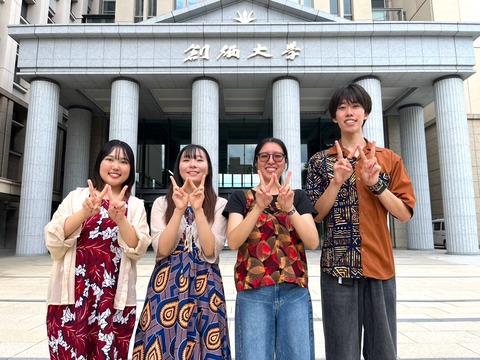
Protecting African children from infectious diseases: The challenge of "Waka Waka Kenya"
Dedicated herself to the New York screening of a film depicting the atomic bombing of Nagasaki — a new career forged after raising children
To create a world where no one is left behind, we'll transform classroom knowledge into practical skills.
Drawing strength from his studies and encounters at Soka University, he joined Japan's largest general trading company.
We launched and published 'CanSta', a sustainable action platform created by students for students.