

To create a world where no one is left behind, we'll transform classroom knowledge into practical skills.
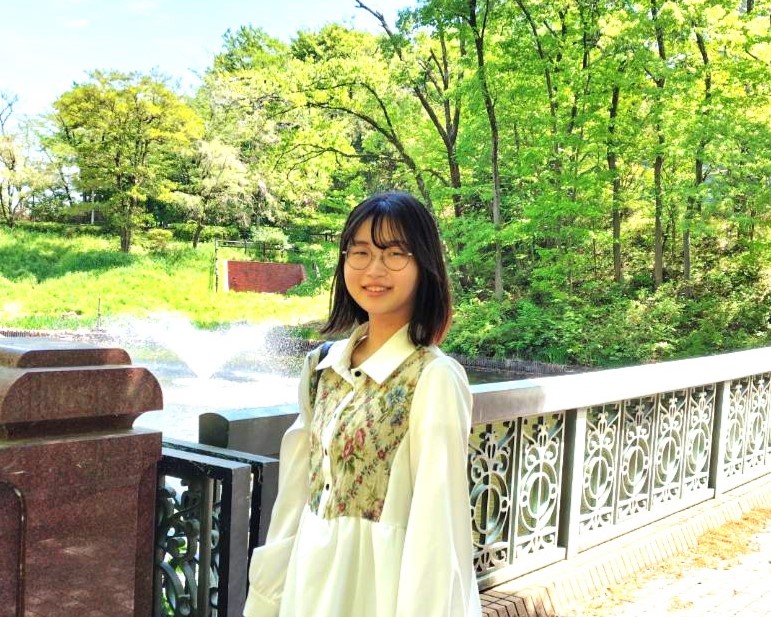
Masae Miyauchi (Miyauchi Masae Faculty of Letters Department of Human Studies 3rd year
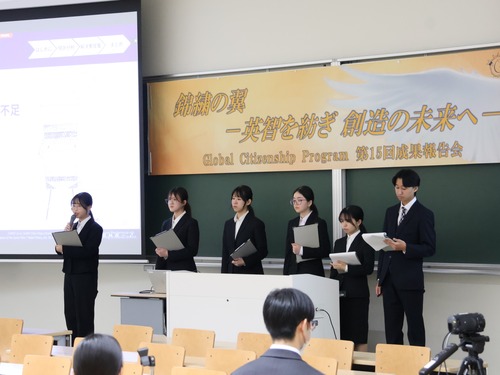
The GCP (Global Citizenship Program), which develops language skills and problem-solving skills for success in the international community, is a unique learning program unique to Soka University. Masae Miyauchi (Faculty of Department of Human Studies Letters, 3rd year), one of the GCP students, builds on her on-campus learning and the questions she encountered, gaining diverse experiences such as study tours in Thailand and NGO activities, and is developing the ability to address social issues surrounding children around the world from a "field perspective."
Why did you decide to take the selection exam for the Global Citizenship Program (GCP) when applying to Soka University?
I've been interested in international cooperation since elementary school, partly because of UNICEF commercials and other media. I became seriously aware of Soka University's GCP program during high school. At the time, I felt the limitations of learning in crowded classrooms, so I felt that GCP, where I could learn skills that contribute to international development in small classes, would be a place where I could expand my potential. Another reason I decided to apply to GCP was that I wanted to acquire, from an academic perspective, the skills to support "people who are left behind in ways that are not easily visible to others" and "people who are marginalized in society."
What skills have you acquired through taking GCP courses so far?
Through these classes, I believe I have developed a heightened awareness of global issues such as women's and children's labor problems, climate change, and refugee issues, and I have gained the perseverance to continue to honestly confront myself and society. However, at the same time, the more I learn, the more I feel like I am drifting further away from the "front lines" of social issues.
I was a young carer living with a family member who needed care, and I felt a gap between my own circumstances and the image of a "young carer" as defined by society, making me feel like I was being left behind. Through my studies at GCP, I recalled that experience and began to wonder how much the reality of people facing similar social challenges differs from the knowledge I'm currently absorbing in the classroom, and whether the knowledge I've gained in class is biased.
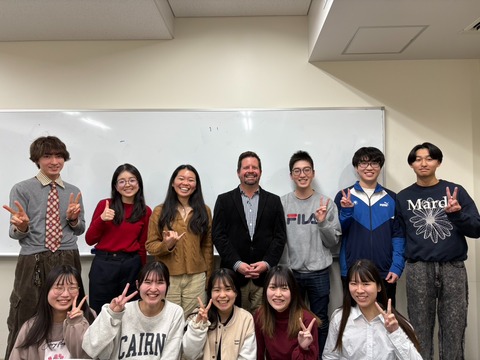
Was participating in the study tour in Thailand an opportunity to experience that "reality" firsthand?
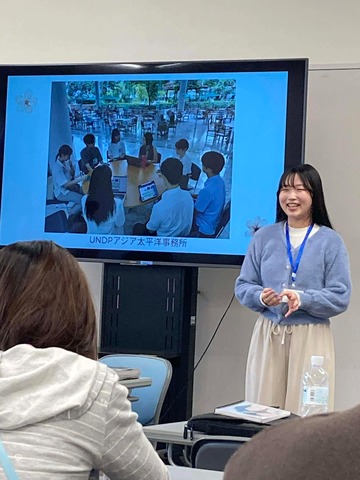
That's right. I wanted to experience firsthand the living environment of marginalized people, so in September of my first year, I participated in a study tour organized by the international NGO "Nogezaka Glocal" in Thailand.
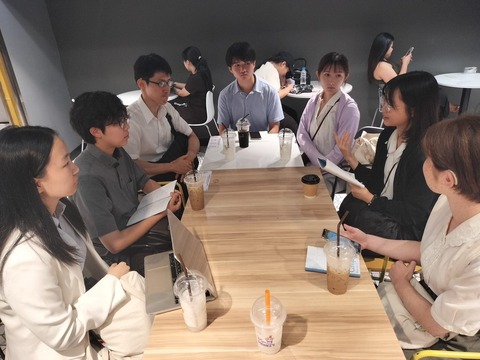
In the field, I visited communities of immigrants from Myanmar, garbage dumps where migrant workers are employed, slums, universities, government agencies, local medical centers, and UN agencies, allowing me to experience various social issues firsthand. I was shocked by the sight of immigrants working diligently in harsh conditions, and at the same time, I witnessed professionals in the fields of welfare and human rights enthusiastically tackling problems. At a Thai government agency, I was particularly impressed by how cheerfully the female staff members were discussing solutions to gender issues. I had imagined a more serious environment, where people were grappling with the contradictions between ideals and reality, so my image of the "field" being like this was completely overturned. Witnessing the seriousness of the issues, along with the reality of those who are confronting them, strengthened my desire to be involved in international cooperation once again.
Since returning from the study tour, have there been any changes in your learning approach to GCP?
I think my understanding of the knowledge and information I receive in class has improved. Visiting sites dealing with diverse issues such as immigration, elderly welfare, and gender through the study tour allowed me to connect knowledge and organize issues more deeply, thinking things like, "This is how the system works in Thailand," or "They mention the elderly and young people, but what about those in between?"
Last year, you also served as the secretary-general for the "SDGs 'Leaving No One Behind' Essay and Illustration Contest" organized by Nogezaka Glocal, which also conducted a study tour.
I first learned about Nogezaka Glocal's activities when I entered the essay portion of their contest during my third year of high school. I was a participant until my first year of university, but last year I became involved on the organizing side for the first time.
This contest, themed "Leaving No One Behind," brings together free-form works with young people at the forefront. Last year, we created a new AI category to solicit works using AI, and as the secretary-general, I played a key role in coordinating the discussions for it. It was a very challenging decision, but by separating AI-based works from the existing categories, we were able to maintain fairness while making it easier for people whose native language is not Japanese or who face difficulties in expressing themselves due to disabilities or other reasons to participate. I believe we have taken a new step forward.
What did you learn from your experience as Secretary-General?
In discussions regarding the AI department, I made sure to elicit everyone's opinions and create a common understanding, while being careful not to let the opinions of the majority or members with specific roles take precedence. From this experience, I learned the importance of proactively expressing my own opinions, not being afraid to challenge or be rejected, compromising, respecting diverse opinions, and finding common ground when faced with questions that have no easy answers.
Most of the discussions I've experienced in the past have involved the majority persuading the minority, so being able to thoroughly discuss and reach a consensus on the AI sector was a great success for me. The ability to find common ground with people who hold different opinions is an essential skill in the field of international cooperation. Being able to do that myself has boosted my confidence and further strengthened my desire to be involved in international cooperation.
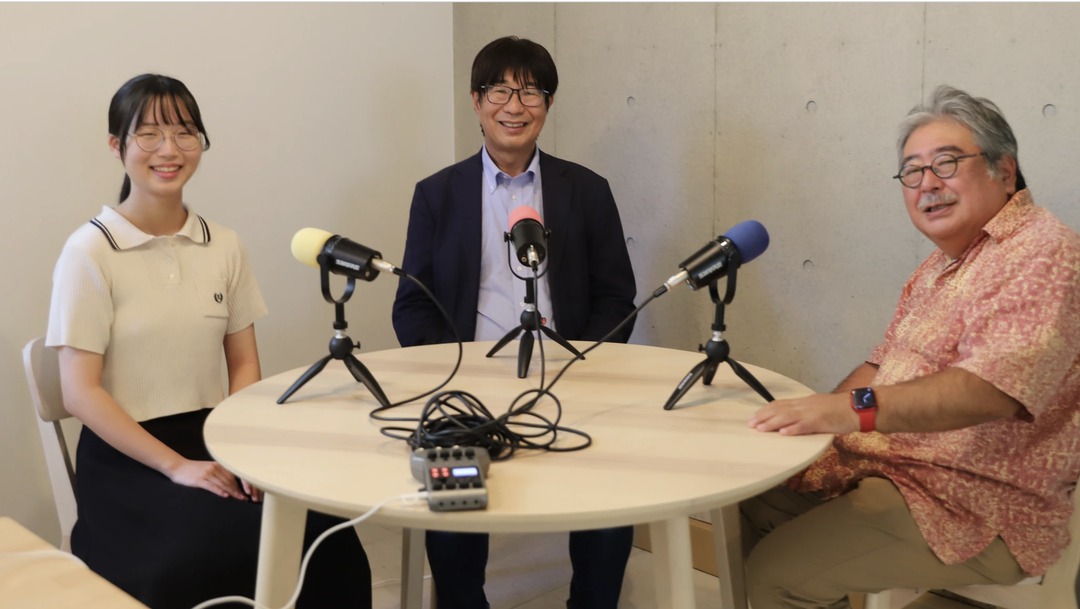
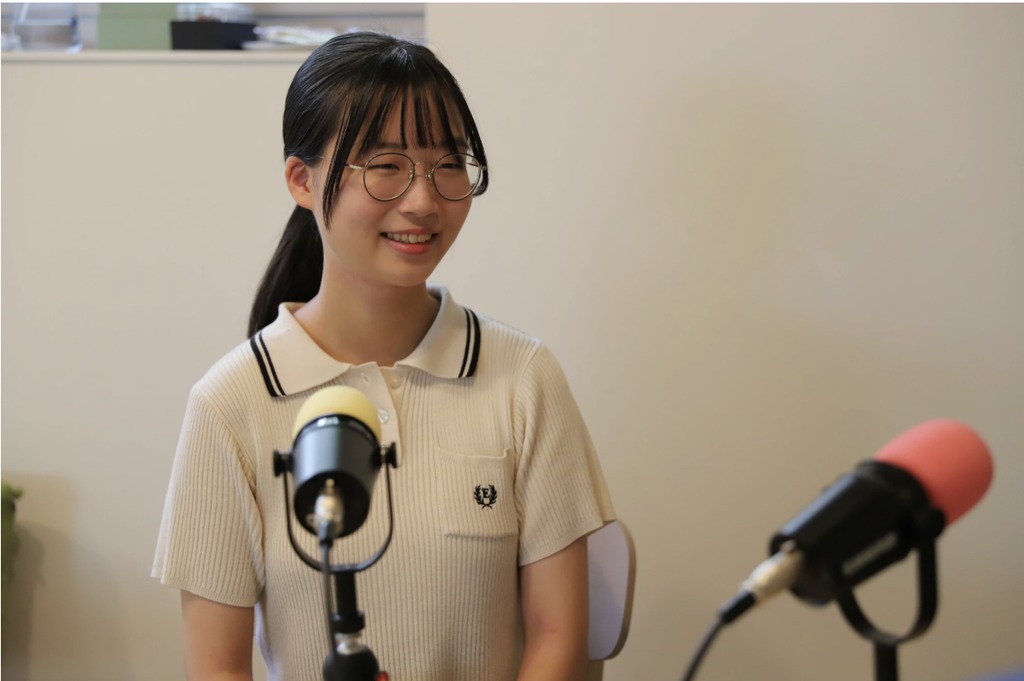
You appeared on a podcast distributed by the Asahi Shimbun's news website last October. What did you learn or think about that experience?
The program I appeared on features interviews with people who are active on the world stage. In the episode I participated in, we spoke with a photographer and the head of an NGO. Through their words, such as "When you make a decision, some people are left out" and "Sometimes a photograph you take unintentionally hurts someone," I learned about the worries, conflicts, and difficulties faced by people involved in international cooperation. However, this also became an opportunity for me to focus on those who are hurt and to create an environment where no one is left alone.
She recently participated in the Model African Union (MAU) Japan conference held in Tokyo, and she also has plans to study abroad in Turkey in September. Her learning opportunities are expanding!
I participated in MAU as a representative of Liberia, and I believe I was able to fully utilize all the learning and experience I had gained both inside and outside of university, from English to problem identification and discussion skills. Before entering university, I was the type of person who was really bad at expressing my opinions, but thanks to my professor in GCP who taught me that "no question means no interest," I was able to actively participate in discussions. Our Liberian representatives won the top prize for the position paper (a document that clarifies each country's position on an agenda item) that we prepared prior to the conference. I was so happy.
Currently, building on my pre-existing concerns and my studies at university, I am particularly interested in alleviating the psychological distress experienced by immigrant and refugee children. Therefore, in Turkey, I would like to study immigration, refugees, the political economy related to disasters, and the influence of music on the spirit.
Please tell me about your future goals.
My goal is to contribute to creating a society where all children can live with hope. As I mentioned earlier, I am interested in immigrant and refugee children, and I believe that in the midst of the ongoing global uncertainty, immigrant and refugee children, in particular, are often abandoned by society. I want to create human connections through the activities of international NGOs and other organizations so that people who are desperately trying to survive these anxious days can feel even a little bit of security.
Please give a message to younger students who are aiming to attend Soka University.
Soka University is a place overflowing with positive energy, embodying a philosophy of respect for life and peacemaking. This university offers so many opportunities and has a very positive atmosphere for taking on challenges. No matter what situation you're in right now, you don't have to give up at Soka University! I myself, by taking on challenges one step at a time at Soka University, international cooperation, which was initially just a dream, became something that "might be achievable," and now I feel like "let's make it happen!" I would be delighted to join you in the exciting challenge of making Soka University the best in the world. We look forward to seeing you!
Faculty of < Literature Department of Human Studies 3 years>
Masae Miyauchi
Masae Miyauchi
- [Favorite saying]
- Learn, win, and conquer the world with an unyielding spirit and cheerfulness.
- [Personality]
- High empathy
- [hobby]
- Art appreciation, choral singing
- [Books I've read recently]
- A Happy Death / Camus
Pickup
Protecting African children from infectious diseases: The challenge of "Waka Waka Kenya"
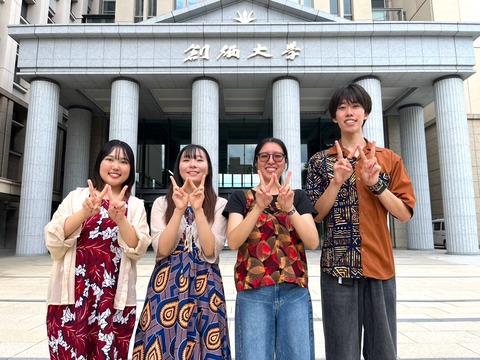
Dedicated herself to the New York screening of a film depicting the atomic bombing of Nagasaki — a new career forged after raising children
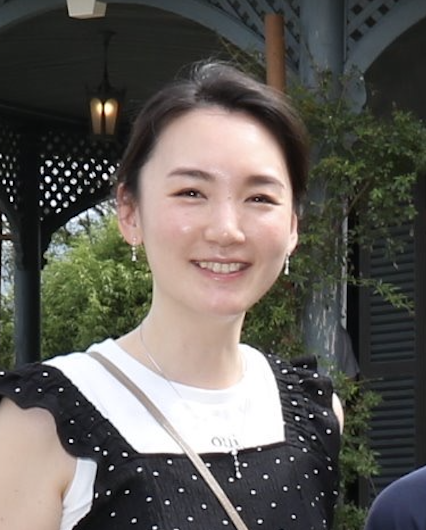
To create a world where no one is left behind, we'll transform classroom knowledge into practical skills.
Drawing strength from his studies and encounters at Soka University, he joined Japan's largest general trading company.
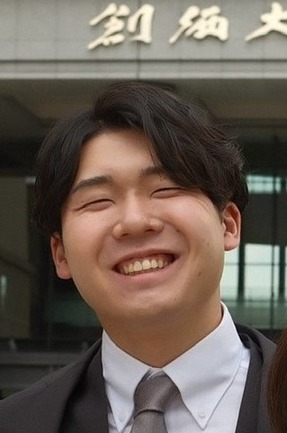
We launched and published 'CanSta', a sustainable action platform created by students for students.