

Finding Courage in Research: Dr. Skye Chirape Discusses Epistemologies of Liberation for Refugee Week at SIPS
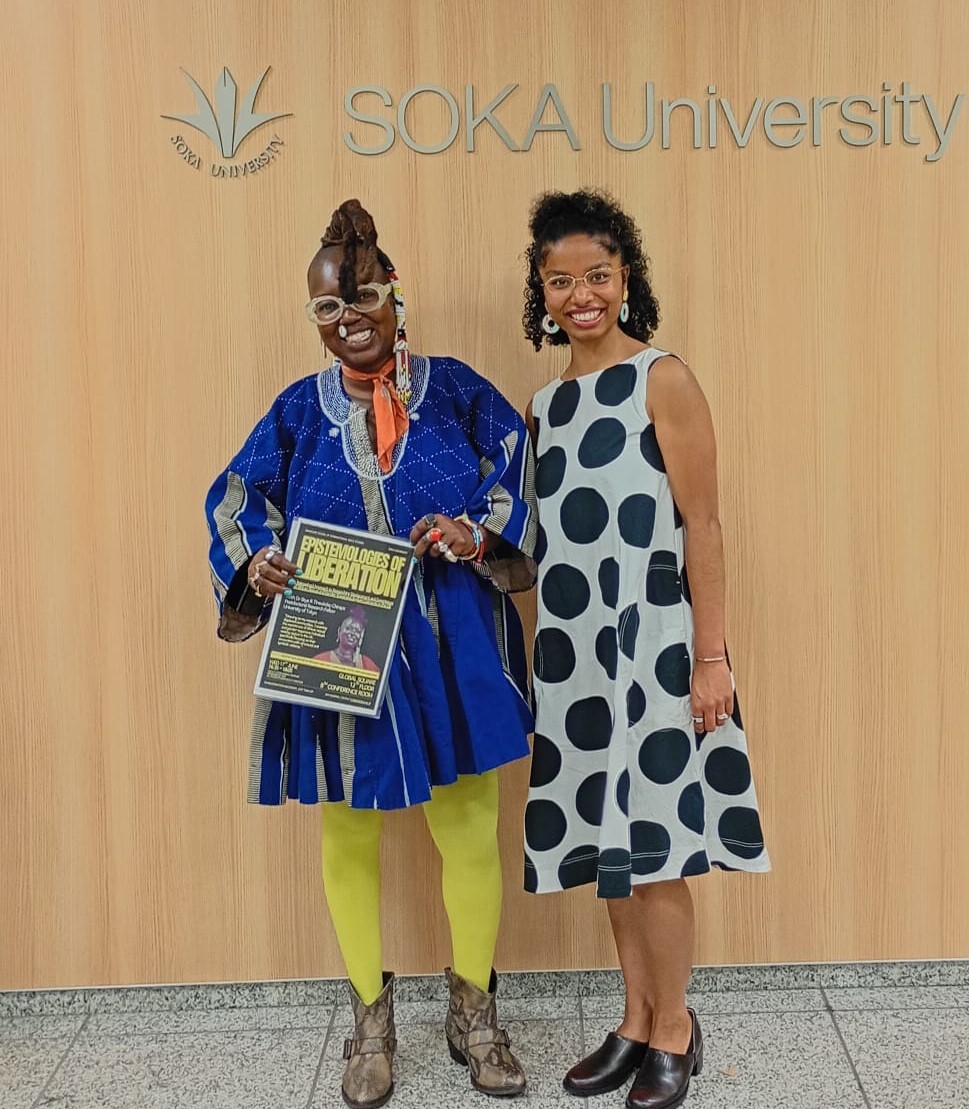
This June, we were very lucky and excited to welcome Dr Skye Chirape to speak at a Faculty Development seminar organised by SIPS, delivering a talk and discussion under the title ‘Epistemologies of Liberation: A Reimagined Approach to Researching Displacement and Experiences of African Sexual and Gender-Expansive Asylum Claimants in the UK’. The talk was delivered as part of our department’s contribution to this year’s iteration of Refugee Week (15th – 19th June 2026).
Refugee Week is the world’s largest arts and culture festival celebrating the contributions, creativity and resilience of refugees and people seeking sanctuary. Established in the UK in 1998, Refugee Week takes place every year around the time of World Refugee Day (20th June). While its origins are in the UK, it has since grown to be an international event, with activities taking place in over twenty countries throughout the whole week. Refugee Week seeks to bring together people from different backgrounds to connect beyond labels and articulate a more meaningful understanding of why people are displaced, and the challenges they face when seeking safety. The theme for this year’s Refugee Week is courage.
It is against this background that we learned more about Dr Skye Chirape’s research with displaced people, particularly those of African heritage, in the UK. Dr Chirape is a Postdoctoral Research Fellow based at Tokyo College at the University of Tokyo where she is developing a two-part decolonial project on trauma-informed immigration litigation and trauma research environments. Her trajectory is remarkably international – she has Zimbabwean roots but also studied in the UK and South Africa before moving to Japan. She has researched areas including trafficking, gendered violence, displacement, borders, structural violence, trauma and gender and sexual identity, as well as holding space for collective care with marginalised communities.
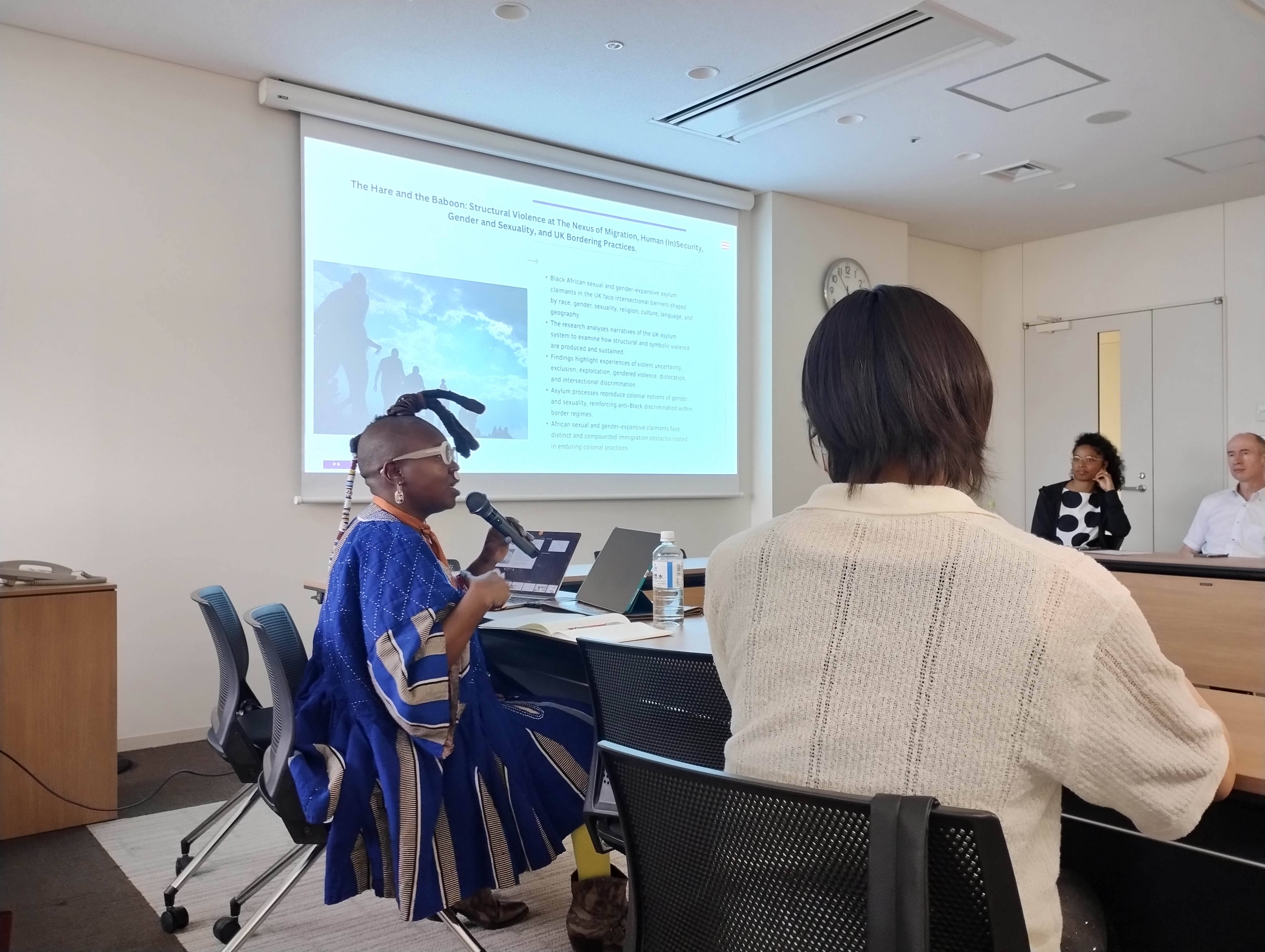
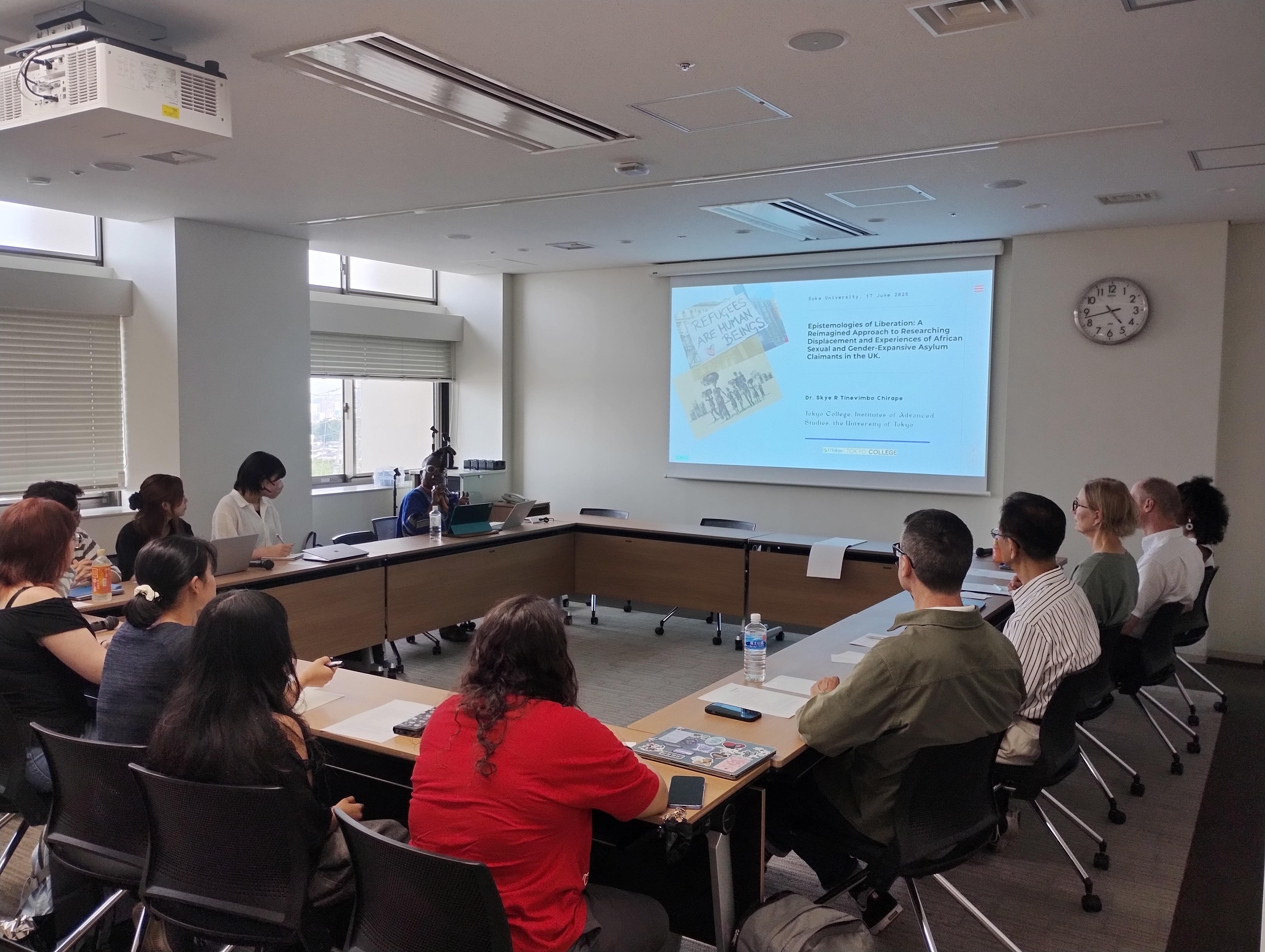
During the talk and discussions, we learned a lot about different kinds of decolonial and feminist approaches to doing meaningful and sensitive research with displaced people. Both decolonial and feminist traditions of thinking emphasise the need to work with the ethics of care in mind. We know that displaced people can be exposed to serious harms and violence as they navigate the difficulties of borders and border systems. What does it therefore mean to support and work with them in sensitive, ethical, and caring ways? As Dr Chirape’s work underscored, doing this work meaningful is about so much more than just clearing the institutional ethics review board procedures. How can we both study and refuse harm and violence in the research that we do – as well as across the wider world that we live in? Where can we find the courage to speak up, push back, and do what is right rather than what might be easy? Dr Chirape’s work pointed to some of the knowledges, communities, and relationships that might help us to find this courage: Remembering that all of us already hold knowledge in our bodies and empowering ourselves to explore these knowledges in different ways – from more traditional forms of academic writing to creative and artistic expression, and beyond!
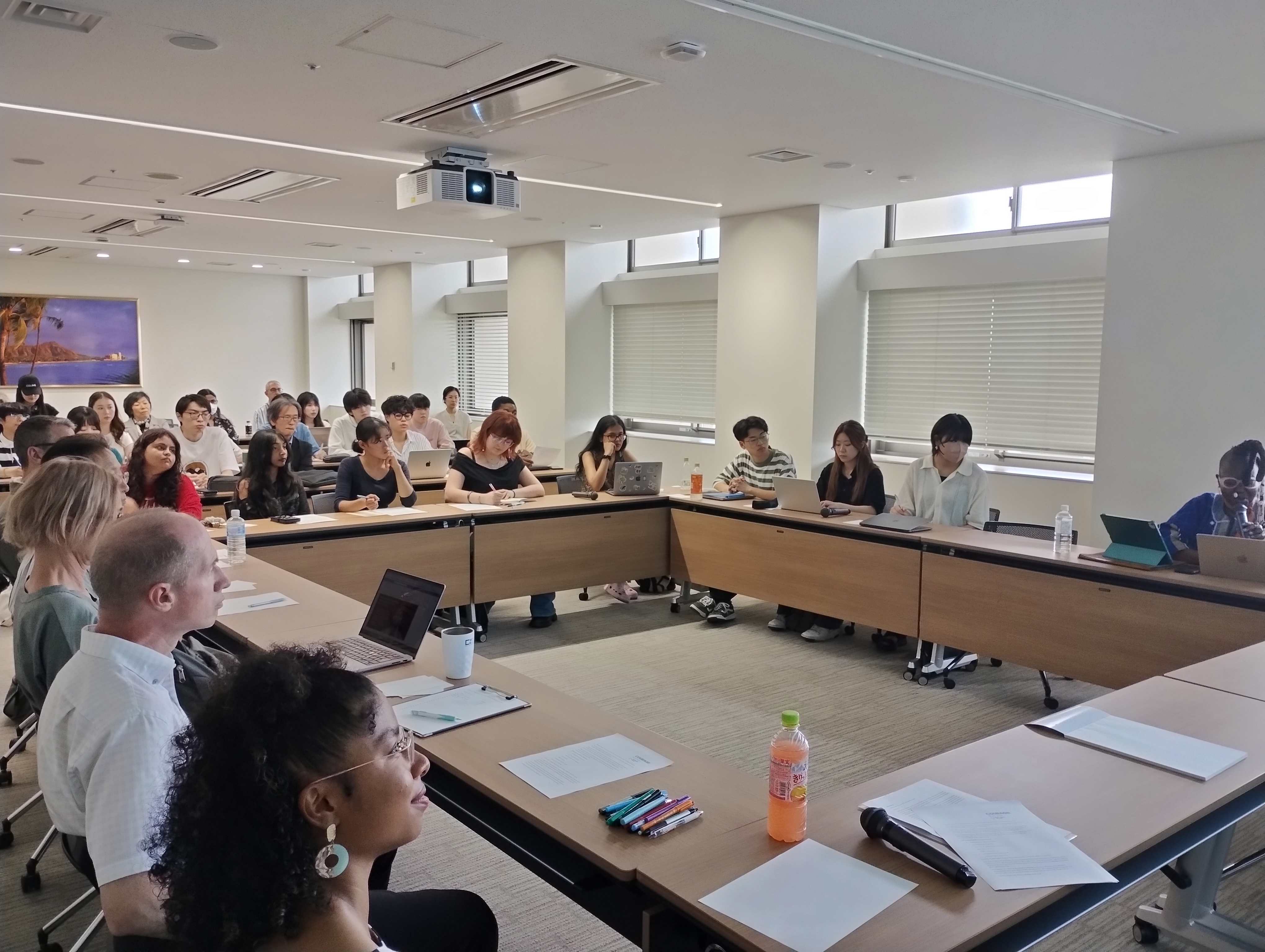
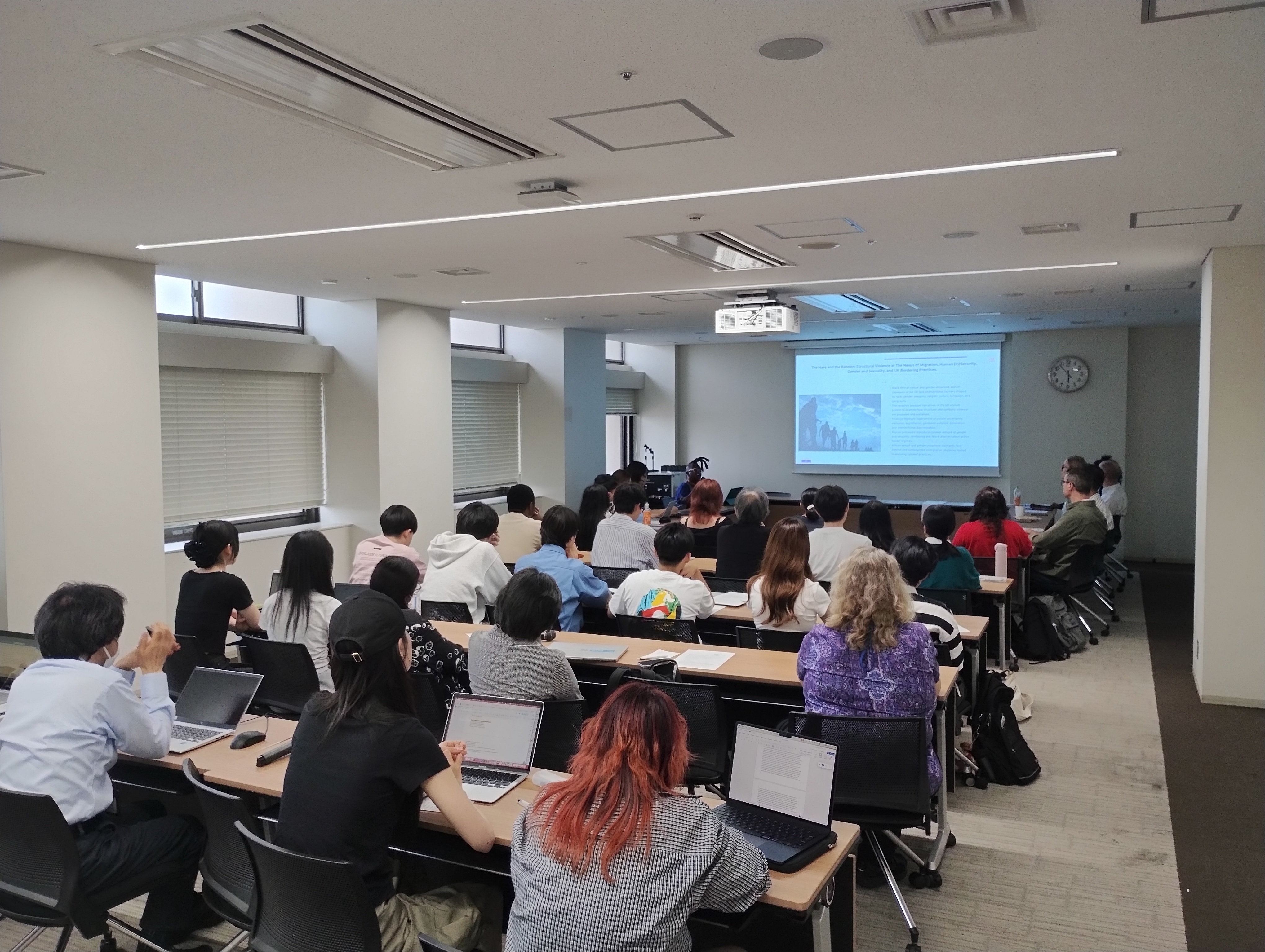
The FD seminar was well attended by students and colleagues across various faculties including SIPS, the World Language Centre, and the Faculty of International Liberal Arts. The discussion section of the seminar provided a rich opportunity for current Soka University students to share and reflect on their own relationships to thinking about and doing research on sensitive topics such as displacement and marginalisation. We certainly witnessed a lot of courage in them as they spoke up about their hopes and experiences around this topic.
We are grateful to all the participants of this event and to Dr Skye Chirape for joining us in person for such a wonderful and inspiring gathering.