

Special Lecture Marking the 80th Anniversary of the End of World War II: “Together with My Brother Seiji Ozawa: Peace Resonating Art, Rising Above War”
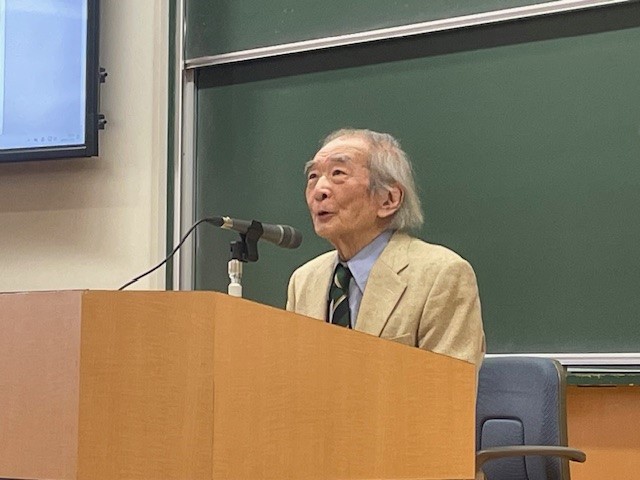
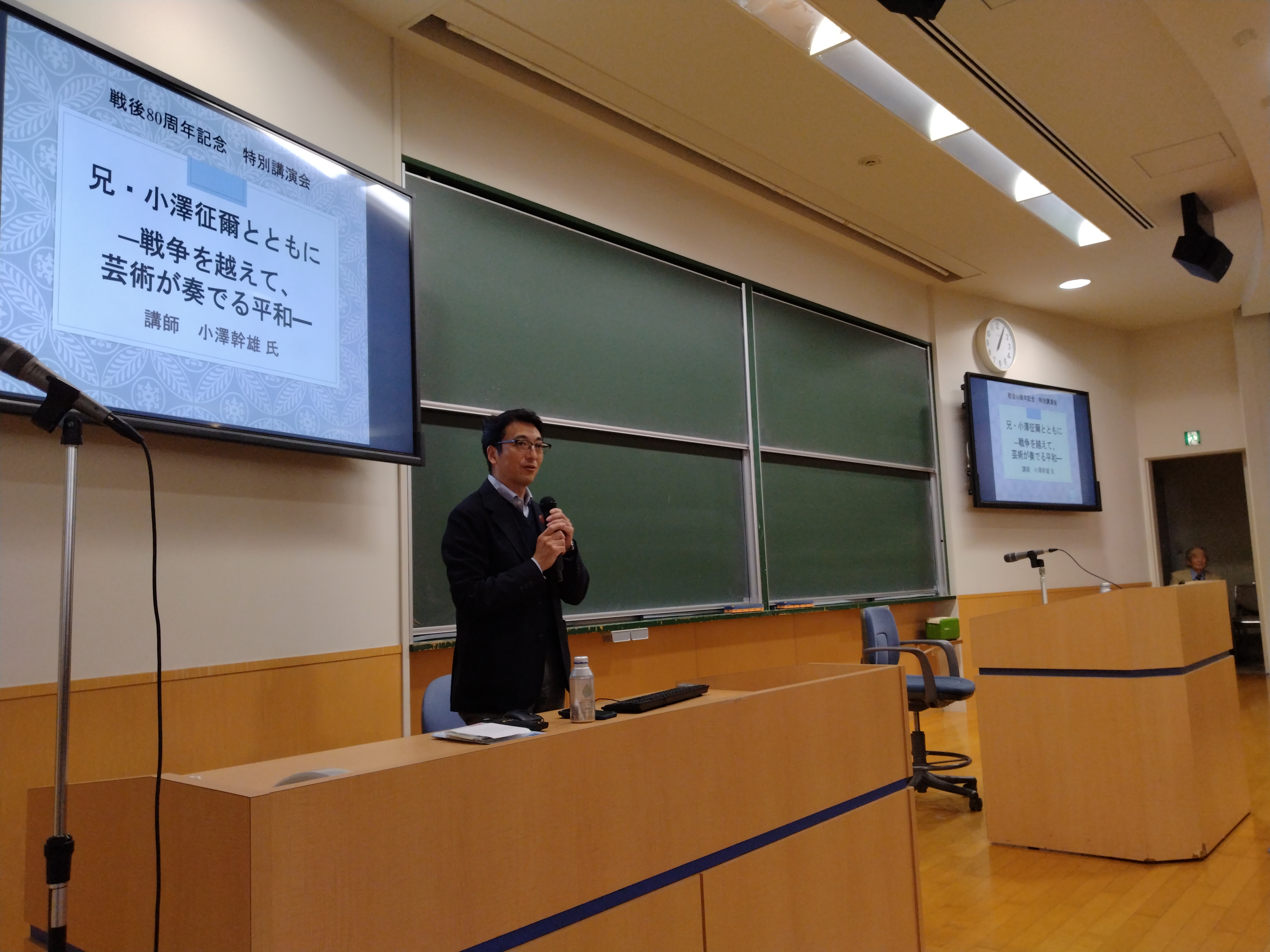
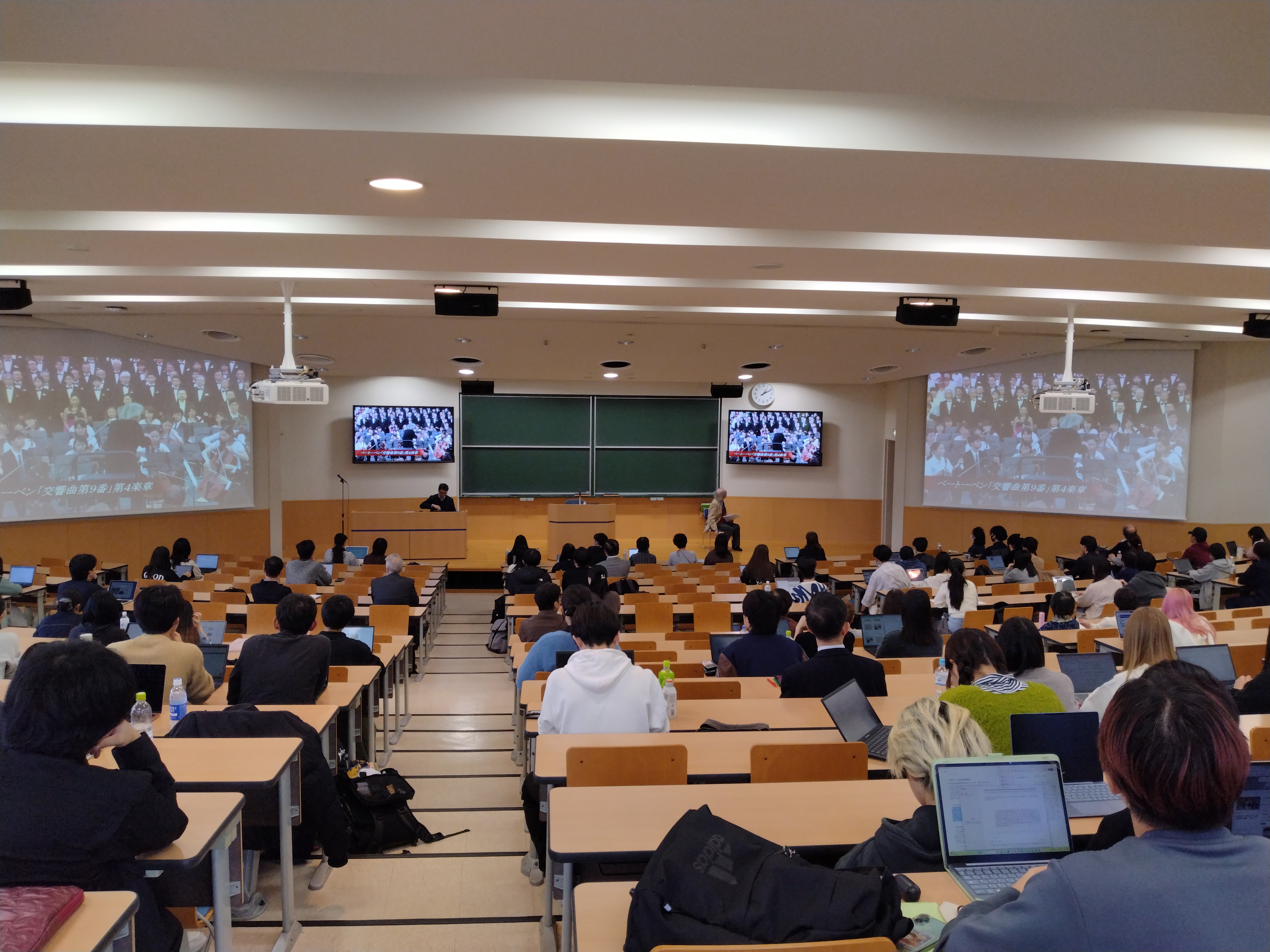
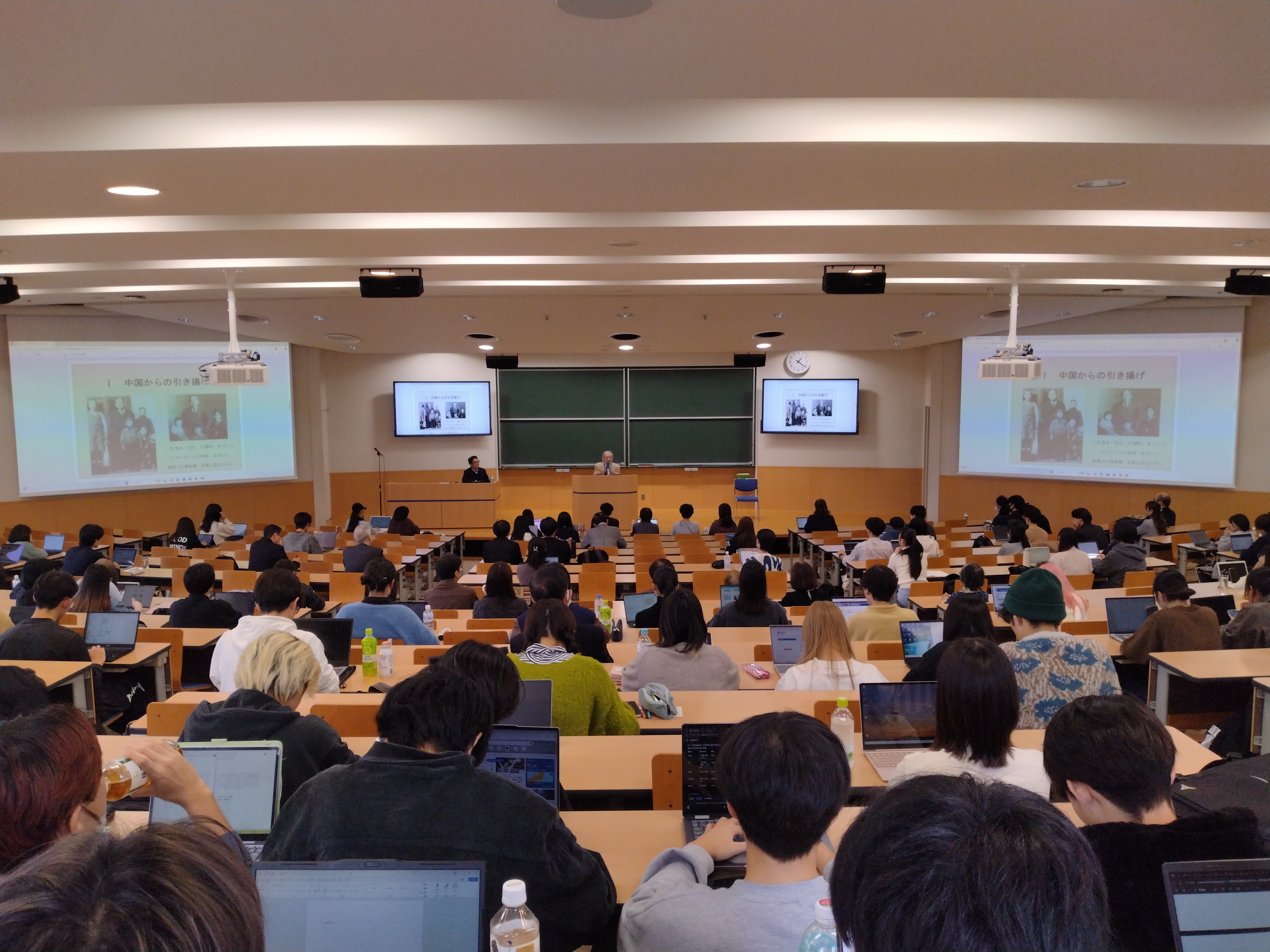
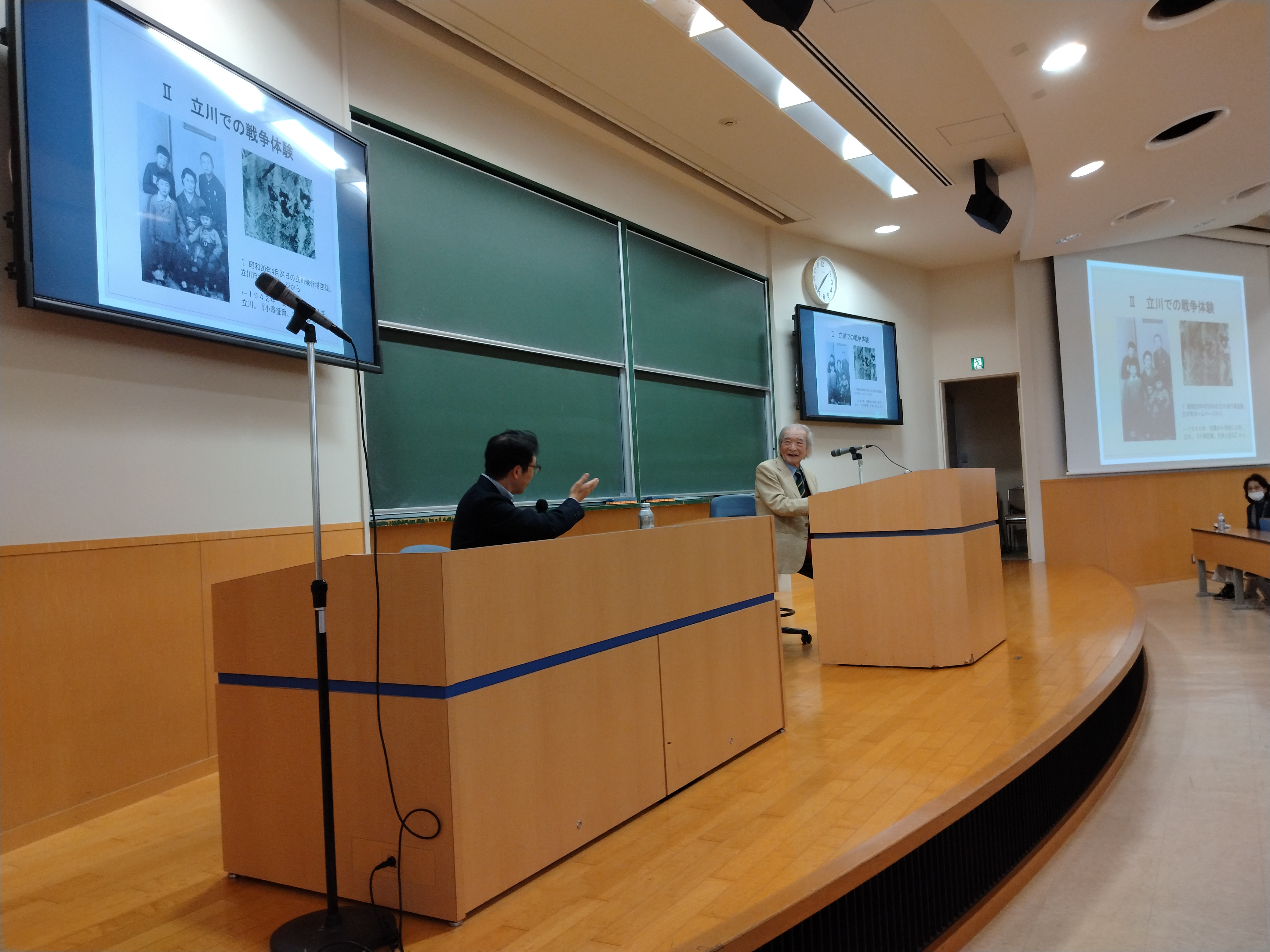
On November 3 (Culture Day), a special lecture featuring actor and essayist Mr. Mikio Ozawa was held in Room S201 of the Lecture Hall Building at Soka University. Organized by IRISE, 200 students attended the lecture.
Mr. Mikio Ozawa, the younger brother of world-renowned conductor Seiji Ozawa (1935-2024), was born in Dalian, China, in 1937. Active as an actor, television personality, and essayist, he has appeared in many plays, including stage plays such as "The King and I," "Gone with the Wind," and "Wanderer's Diary," the NHK historical drama "Katsu Kaishu," "Kaze to Kumo to Niji to (Wind, Clouds, and Rainbow)," and the film "Utamaro’s World." He is also popular as an overall host for TV Asahi’s "Asa Wide," "Mikio Ozawa’s Soft Classic," and his books include "The Day Brahms Played in Matsumoto" and "My Gentle Brother Seiji."
■ Details about the Lecture Content
In the lecture, Mr. Ozawa spoke about his experiences during and after the war,and the story of his brother Seiji’s path to becoming a world-renowned musician.
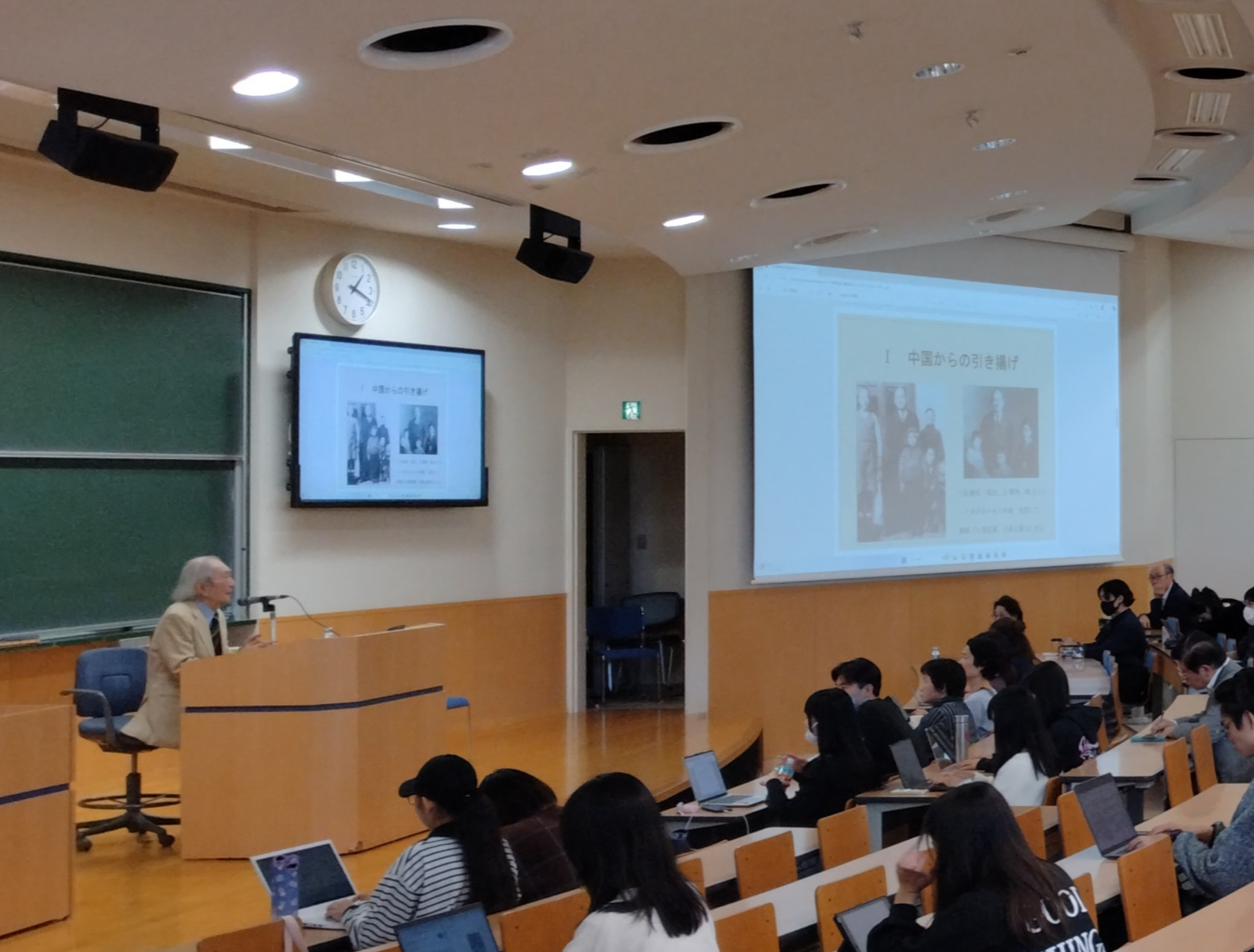
While practicing as a dentist in China, his father published sharp critiques of the Japanese military's tyranny in magazines. As a result, he caught the attention of the military police, leading to the family’s expulsion from China and repatriation to Japan. He spoke candidly about the deep-seated fear and trauma that he experienced in his childhood, from witnessing air raids in Tachikawa and life in bomb shelters, to the harrowing moments of being strafed by small aircrafts. He even recounted the shock of witnessing the lynching of an American soldier, sharing these experiences with raw honesty.
On the other hand, he recalled how his mother’s personality and the power of music sustained the brothers, and that the sound of the accordion and the four-part harmony of hymns served as a beacon of light during wartime.
He then went on to talk about his brother Seiji. He recounted the family's struggle with poverty and shared an incident where their family transported a piano from Yokohama using a hand cart. He also shared how Seiji discovered music at Seijo Gakuen and his subsequent selection by Hideo Saito to be part of the inaugural class at Toho Gakuen, where he underwent intense training. In addition, through a younger brother's perspective, he shared how his brother overcame discrimination and prejudice after moving to Europe. And from winning the International Besançon Competition for Young Conductors, he went on to become a world-renowned conductor, leading world-class orchestras in Chicago, Toronto, San Francisco, and Boston.
Reflecting on his brother’s unwavering commitment to his path despite adversity, Mr. Ozawa emphasized the importance of passing down the memories of those who lived through the war. He spoke powerfully of how art has the strength to restore human dignity and hope, urging the younger generation to become the torchbearers of peace. His raw testimony, rooted in his firsthand experience of the war, along with the musical history of his family, left a profound and lasting impression on many students.
Students' feedback emphasized profound learning and fresh perspectives:
”I truly understood the importance of sharing war experiences.”
”I realized the importance of passing history down to future generations.”
”I learned the incredible power of art to sustain the human spirit during times of hardship.”